

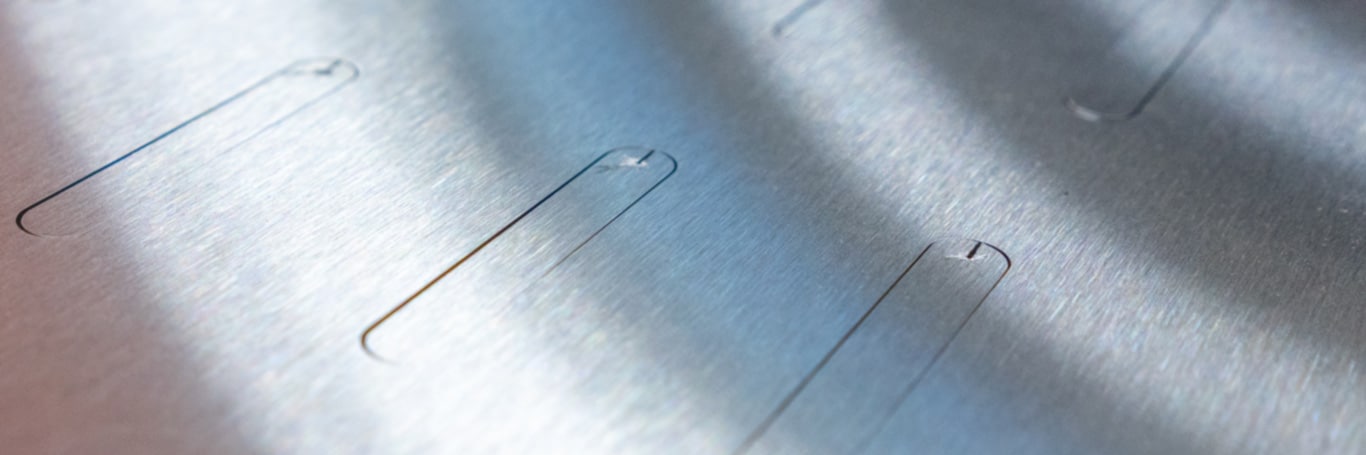
Laser engraving
Laser engraving is a technique we use for permanently marking sheet metal. This method uses a laser to apply precise markings or engravings to the surface of the metal. With laser engraving, for example, serial numbers, barcodes, logos, and other identification data can be applied to metal parts.
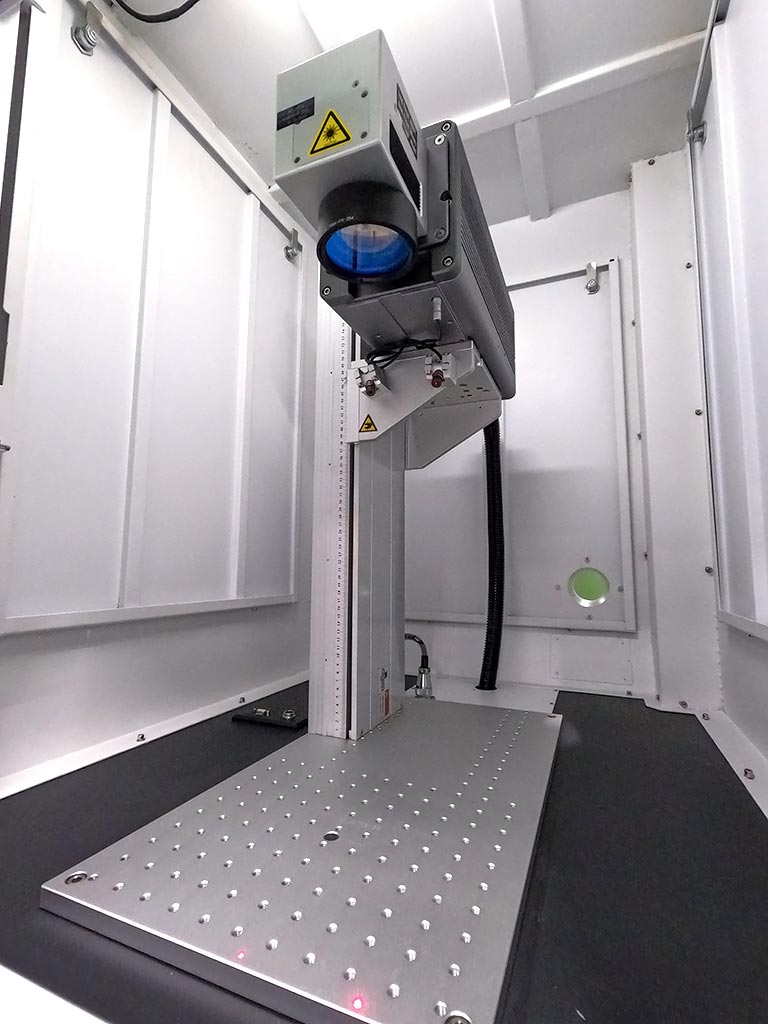
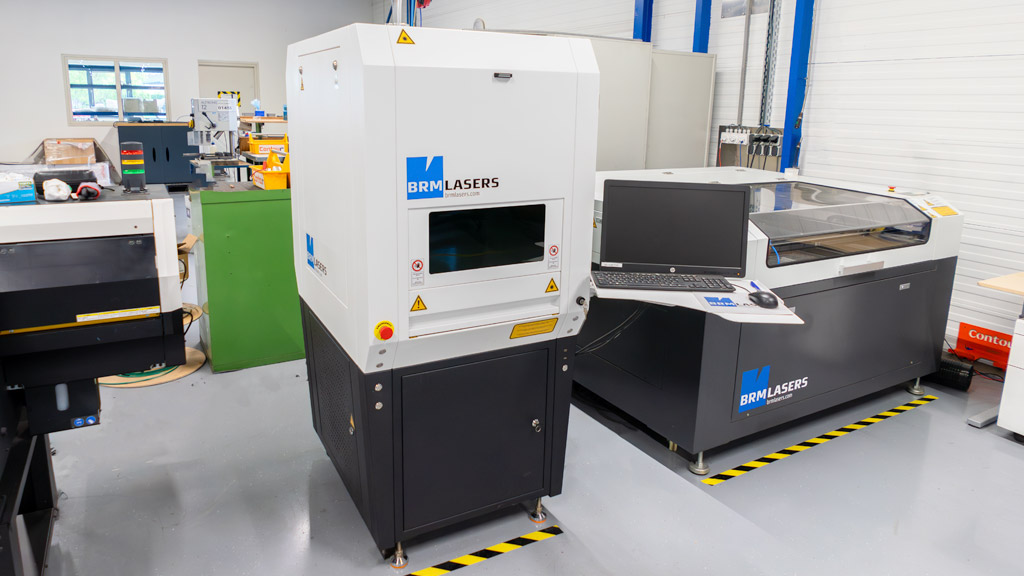
Contour has a BRM CK-FB30 marking laser. This fiber laser can do both laser engraving and laser marking. Besides the marking laser, we can also laser engrave with our laser cutting machine and punch laser machine. Our punch laser also has a mechanical engraving pen.
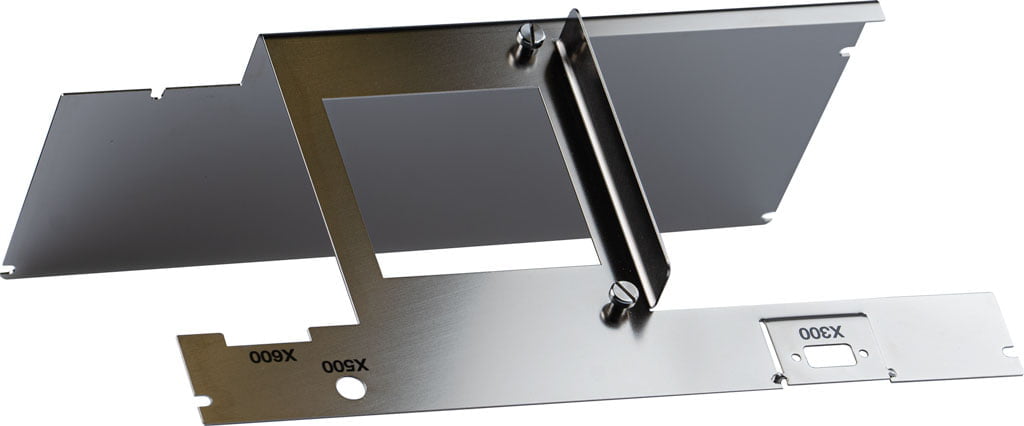
Laser marking
The difference between laser engraving and laser marking is that with laser marking only a thin top layer of the material is hit by the laser beam. The top layer of the material changes color because of the laser beam, which makes the marking visible.
With laser engraving, an actual engraving is made in the material by vaporizing a layer of material with the laser. This creates a visible cavity in the surface of the material.
So you could say that laser marking is a form of laser engraving. In the rest of this article we will use laser engraving as a synonym for laser marking.
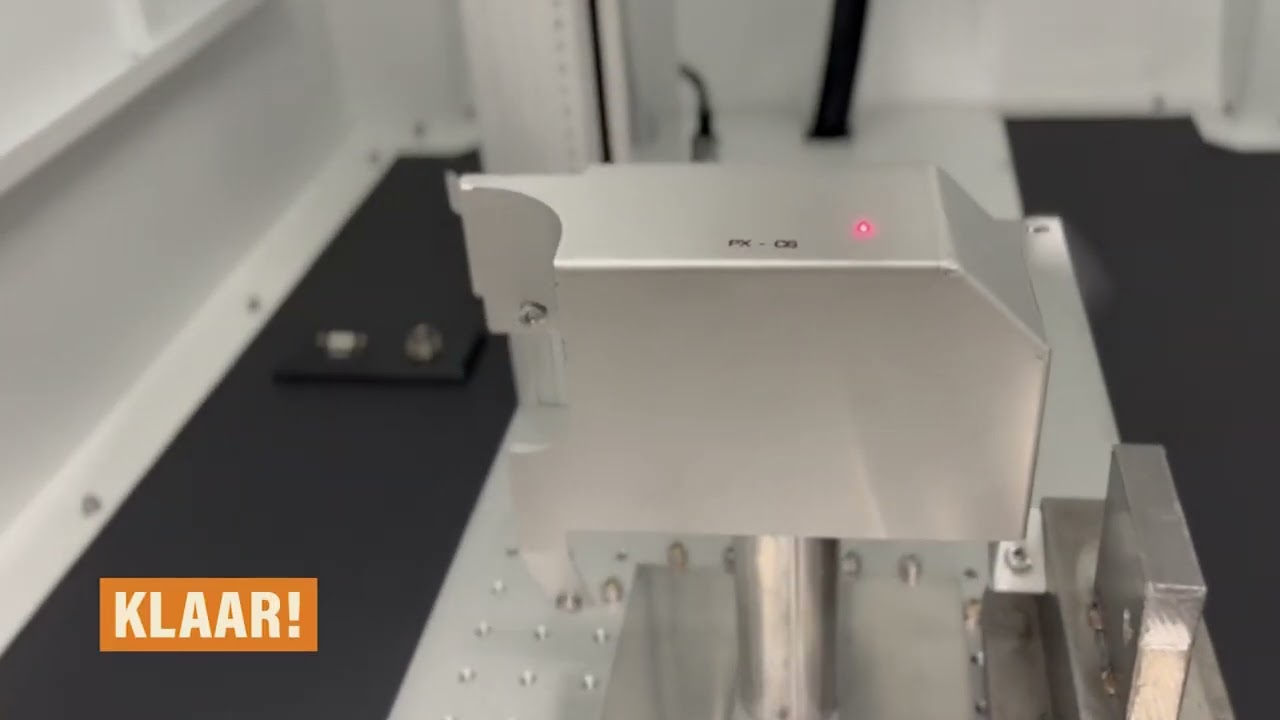
Video of laser engraving
Applications
Laser engraving of metal has several applications. These are examples of applications in industrial sectors.
- Information: With laser engraving, text labels and icons can be applied to metal. For a panel for connectors (plugs), for example, the markings can indicate which connector must be connected at which position.
- Quality control: With laser engraving, quality control and inspection data can be applied to metal parts.
- Product identification: Laser engraving of metal is often used to give products and components a unique serial number. This makes it possible to trace components back to their origin.
Advantages
- High precision: Laser engraving makes it possible to apply detailed markings with maximum precision and resolution. Even small markings remain easy to read.
- Permanent markings: The markings made with laser engraving are permanent and wear-resistant. When exposed to wear, friction, or environmental factors, they stay intact better than markings from an inkjet printer, for example.
- Flexibility and versatility: Laser engraving can be applied to different types of metal, including stainless steel, aluminum, and titanium.
- Contactless and non-destructive: Laser engraving is a contactless method, which means the metal surface is not damaged. There is no physical contact with the material. This prevents deformation or other damage to the material.
Disadvantages
- Limited color options: Laser engraving of metal usually affects the color of the material, but the color choices are limited. The resulting colors are often shades of black, gray, or darker variants of the original color of the metal.
- Safety considerations: Laser engraving requires working with a powerful laser beam, which carries potential risks if it is not used correctly.
- Limitations in choice of material: Although laser engraving can be applied to many types of metal, there are some metals that do not react, or do not react well, to laser engraving techniques.
- Cost of the equipment: Purchasing laser equipment can require a considerable investment at first. This can be a barrier for smaller companies or organizations with limited financial means.
How the technique works
At Contour we use a fiber laser to mark metal. This laser generates an intense, concentrated laser beam. The parameters of the laser source must be set carefully and focused on the material.
The zero point of the workpiece is then determined and the laser beam is aimed at the metal surface. The material is then heated. Depending on the settings and the duration of the laser exposure, the metal can change color, vaporize, burn, or undergo reactions that create a marking. The laser engraving operation can therefore be seen as a process of controlled heat.
The result is a permanent marking on the metal.
The laser beam of the marking laser at Contour is generated by a ytterbium laser source. The laser has a wavelength of 1064 nm and is guided to the laser head through optical fibers.
Materials
| Material | Laser marking | Laser engraving |
|---|---|---|
| Stainless steel | Yes | Yes |
| Alloy steel | Yes | Yes |
| Aluminum | Yes | Yes |
| Anodized materials | No | Yes |
| Titanium | Yes | No |
| Copper | Yes | Yes |
| Brass | Yes | Yes |
| Precious metals | Yes | No |
| Coated metals | No | Yes |
| Hardened metals | Yes | No |
| Cardboard / hardboard | Yes | Yes |
| Wood | Yes | Yes |
| Ceramics / porcelain | Yes | Yes |
| Cork | Yes | Yes |
| Leather | Yes | Yes |
| MDF | Yes | Yes |
| Stone, granite, marble | Yes | Yes |
| Paper | Yes | Yes |
| Textile | Yes | Yes |
| Trespa | Yes | Yes |
Alternatives
- UV printing: With our UV printers, we at Contour can print on metal in any desired color.
- Pen engraving: On our punch-laser combination we can mark sheet metal with a pen tool. This is a mechanical process: the punching machine makes a line or pattern of many adjoining small dots that the pen tool applies to the material.
Sources
- Machine documentation from BRM Lasers