

Punching metal
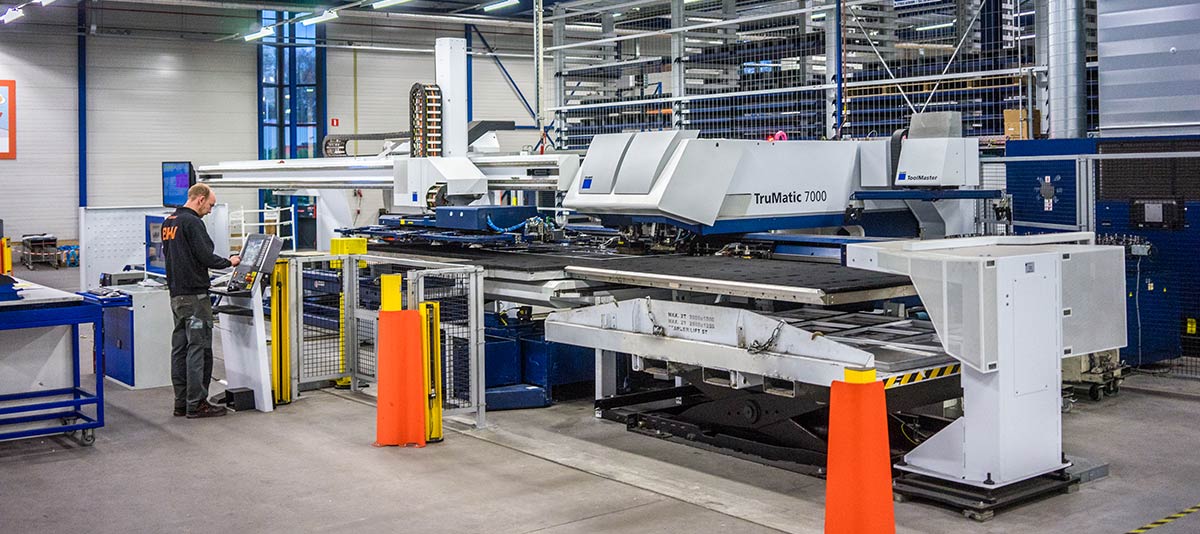
Contour is a leading sheet metal company with two modern Trumpf TM7000 punch-laser combination machines. These machines can both punch and laser cut.
These advanced machines are connected to a fully automatic warehouse (FMS line) and can produce unattended. In this article we discuss the applications, the technical principle, and the advantages and disadvantages of sheet metal punching.
We also discuss the criteria that decide whether punching or laser cutting is the right choice. In addition, we explain what nibbling is and which extra options a punch laser machine offers, such as making embossings and forms, thread tapping, deburring, and making small bends.
+31 (0)543 54 67 89 Request a quote
Applications of punching
Punching is suitable for producing parts from sheet metal. These can be components for equipment building and the automotive, electronics, and construction industries, for example.
With Contour’s punching machines, materials such as stainless steel, aluminum, steel, Zincor, and Sendzimir up to 8 millimeters can be given contours, holes, forms, and threads easily and accurately.
This Contour punch laser machine can punch, nibble, and laser cut. This way the ideal combination of cutting techniques can be chosen for each product.
Technical principle
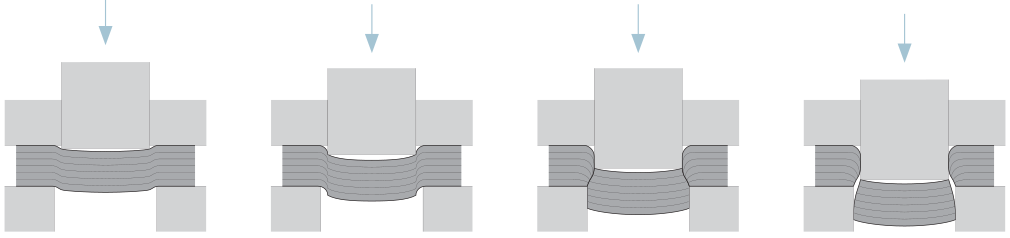
The technical principle of punching is simple and efficient. During punching, the sheet metal is placed between the punch and the die. Shapes, holes, contours, or embossings are then pressed into the sheet metal under high pressure.
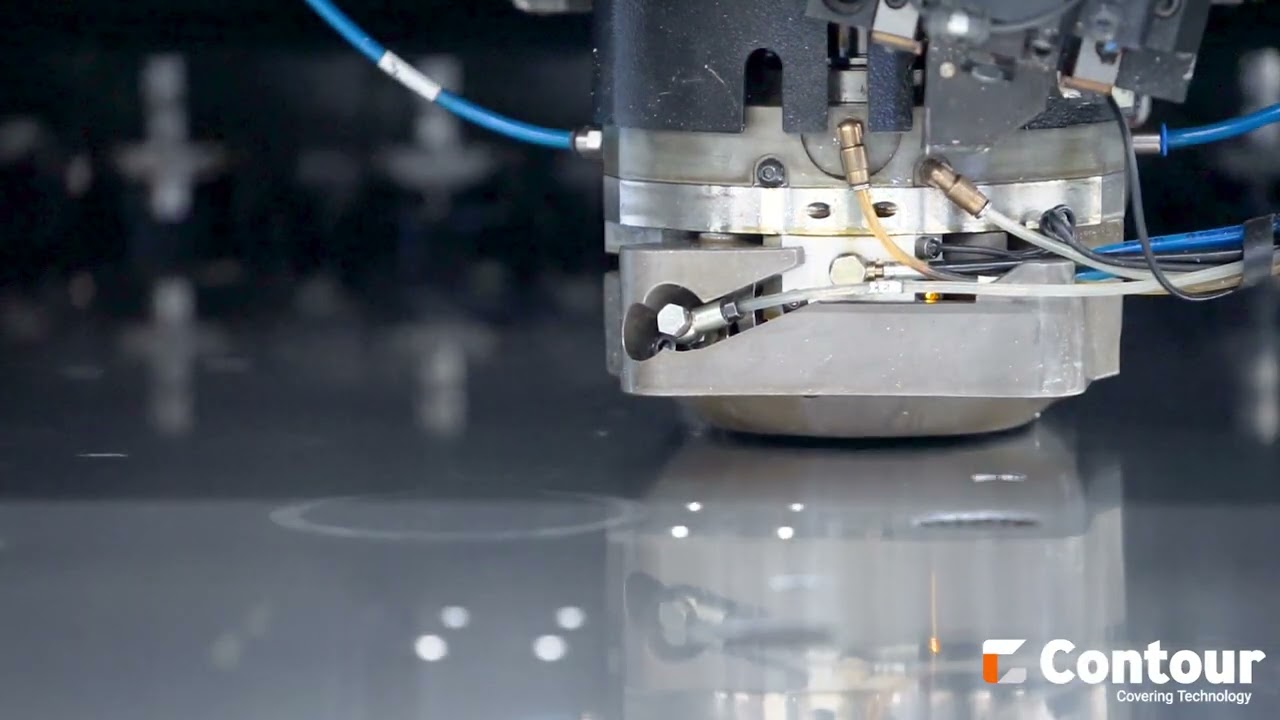
In the video below you can see the punching operation with close-ups of the punching head.
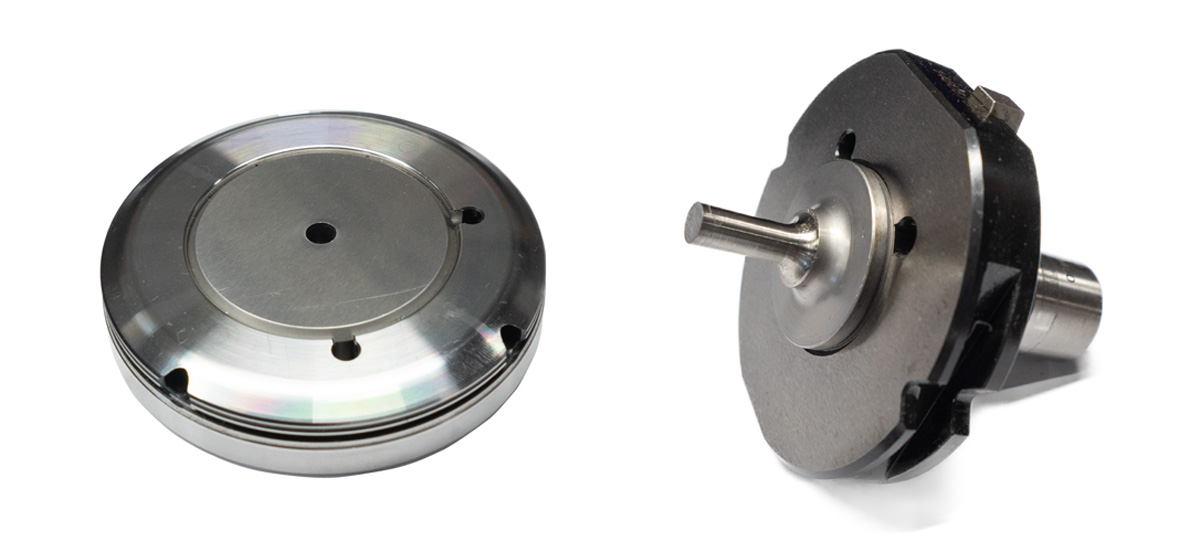
Punching tools
The punching tool, consisting of a punch and a die, is assembled with a matching stripper in a tool cassette. During punching, the stripper holds the sheet metal in place while the punch is pulled back out of the material.
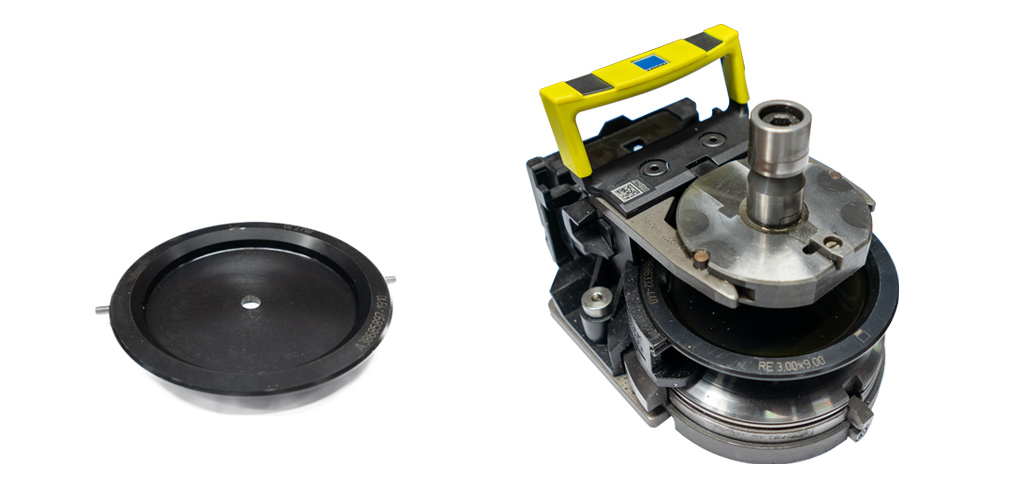
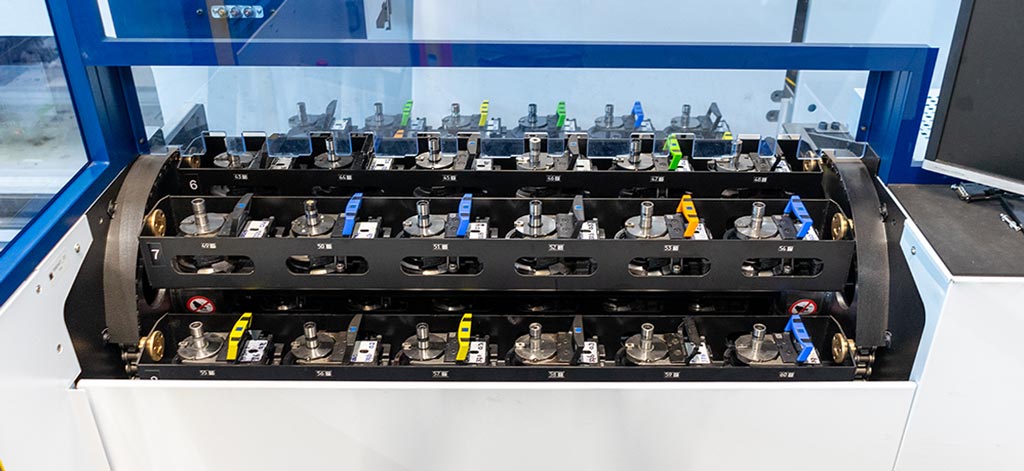
The operator then places the right cassettes for the scheduled work orders in the tool changing system of the punching machine.
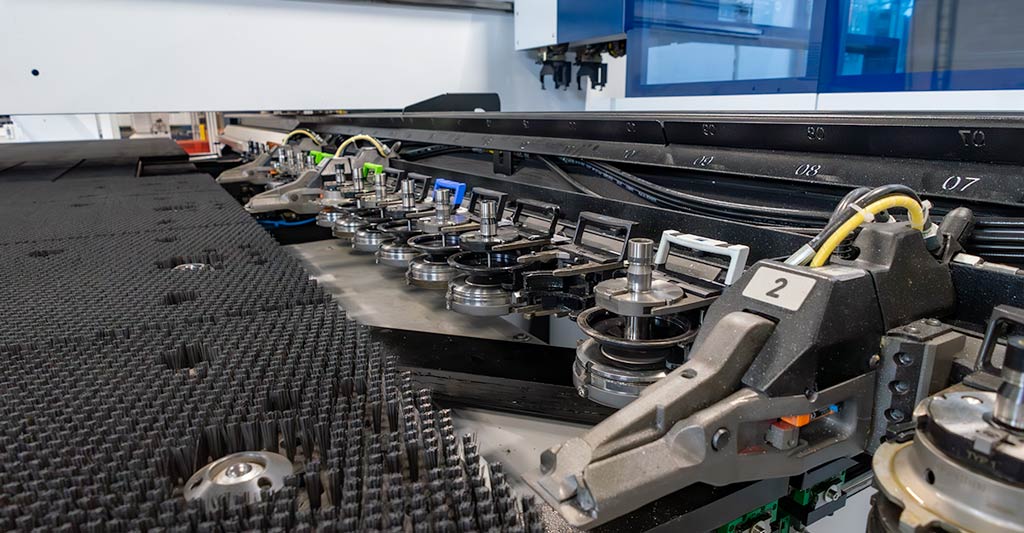
When the work order is started on the machine, the machine automatically takes the right tool cassettes from the tool changing system. The machine places these cassettes in the clamp strip. From the clamp strip, the cassettes can be exchanged directly in the punching head.
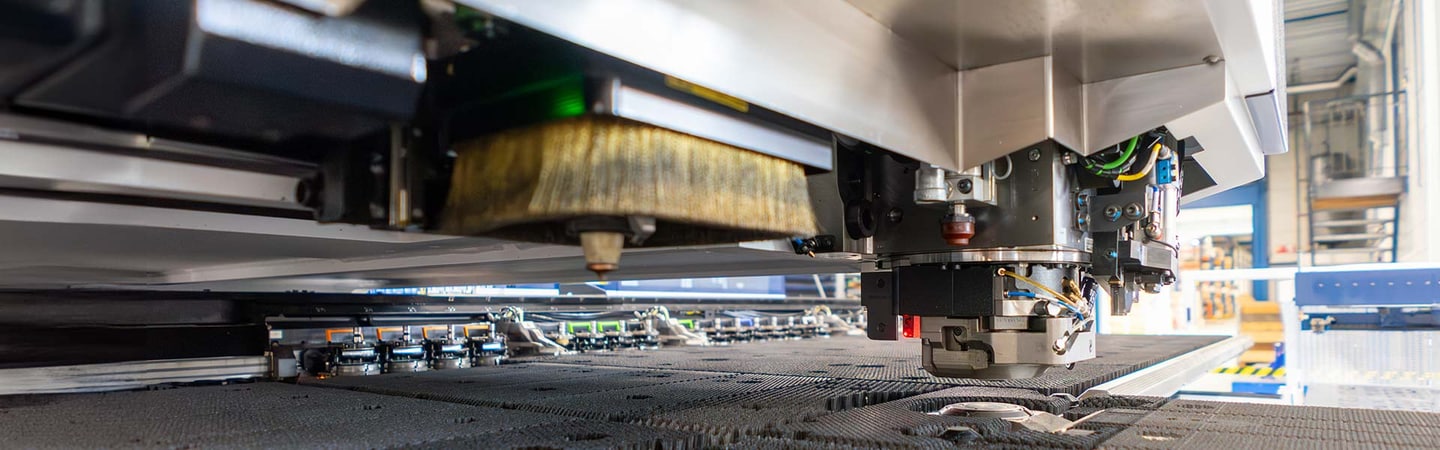
The image below shows the clamps that hold the sheet to be punched, with the tool cassettes for the work order in between. At the top of the image you can see the grippers of the system that exchanges cassettes between the clamp strip and the tool changing system.
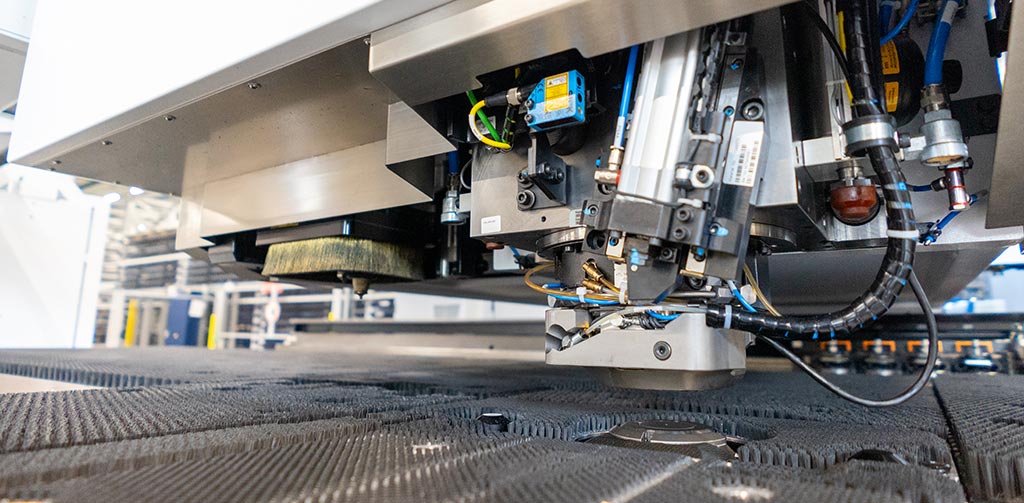
The image below shows the punching head and bottom die with the tool from the cassette.
Nibbling
In nibbling, contours or larger shapes are punched by punching overlapping holes with a punching tool that is smaller than the contour to be cut. This way all kinds of shapes can be punched, even though the shape of the hole does not exactly match the shape of the punching tool.
Advantages of punching
Punching has several advantages, an overview:
-
Speed
Punching is often faster than other sheet metal operations, especially for high-volume production and large numbers of holes. Unlike laser cutting, no hole has to be pierced with a laser beam. Piercing with a laser can be time-consuming. Piercing quickly at high power risks spatter of liquid metal. For this reason, at Contour we often replace the piercing with a punching tool and then complete the contour by laser cutting from the punched hole.
-
No heat input
Unlike laser cutting, punching puts no heat into the sheet. This prevents discoloration, deformation, and contamination.
-
Efficiency and capacity
The machines at Contour can produce unattended thanks to the link with the fully automatic warehouse. This increases capacity and reduces costs.
-
Accuracy
Thanks to advanced punching machines, complex shapes can be produced accurately.
-
Little to no processing marks
Thanks to a brush bed and an active bottom die, it is possible to punch with virtually no tool marks. The active bottom die moves down as soon as the sheet is moved.
Disadvantages of punching
Punching also has some disadvantages:
-
Limited freedom of shape
Punching is less suitable for extremely complex shapes and thin materials. If the punching tool does not have the exact shape of the contour to be cut, the shape has to be made in several strokes. This is time-consuming, especially when the tool has to be changed between strokes. Nibbling complex curves also leaves minimal punching transitions. Laser cutting, on the other hand, can cut any line you want.
-
Punching transitions
Nibbling leaves a slightly noticeable punching transition. A punching transition is a small ridge on the cut edge of the material where the punching tool overlaps the previous punch.
-
Tool changes
Changing punching tools can take time and limits flexibility.
-
Material loss due to the tool
When the outer contour of a sheet metal product is cut by nibbling, the individual products to be punched must be at least the width of the punching tool apart. The punching tool is wider than the kerf of a laser. Depending on the dimensions of the product, this can mean that one extra product just does not fit on a standard sheet.
-
Material loss due to the clamp strip
Because large forces act between the top and bottom die during punching, the sheet moves instead of the punching head during punching and nibbling. To make this possible, the sheet is clamped along its long side with a clamp strip. Where the sheet is clamped, it cannot be punched or cut. For this reason no product can be nested where the clamps grip the material.
Punching or laser cutting?
Several criteria must be considered when choosing between punching and laser cutting.
-
Cost factors
Production speed, complexity, and series work play a role in the choice between punching and laser cutting. Which technique is preferred depends on the contour to be cut and the number of holes.
-
Materials
Punching and nibbling can be used up to a maximum of 8 mm. Thicker sheets must be laser cut.
-
Shape
Punching is ideal for rectangular materials and for radii and shapes for which a specific punching tool has been bought, while laser cutting is better for irregular shapes. For high-volume production we invest in customized tools for the contours to be punched.
-
Material efficiency
Especially for larger series, using both punching and laser cutting on the punch-laser combination can achieve higher material efficiency (less scrap).
Extra options
A punch laser machine, such as the Trumpf TruMatic TM7000 at Contour, offers a number of other options besides punching.
-
Embossings and forms
The machine can also make embossings and form the sheet metal for specific applications. Examples are punching louvre holes, or making a local deep draw or offset in the material.
-
Adding threads
A punch laser machine can accurately tap threaded holes in the sheet metal. Strictly speaking we call this “thread forming”, because the thread is formed rather than cut.
-
Deburring
The machine can roll deburr contours fully automatically. A ball bearing runs along the cut edge on both sides of the material, which rounds off the sharp edge left by punching.
-
Bending
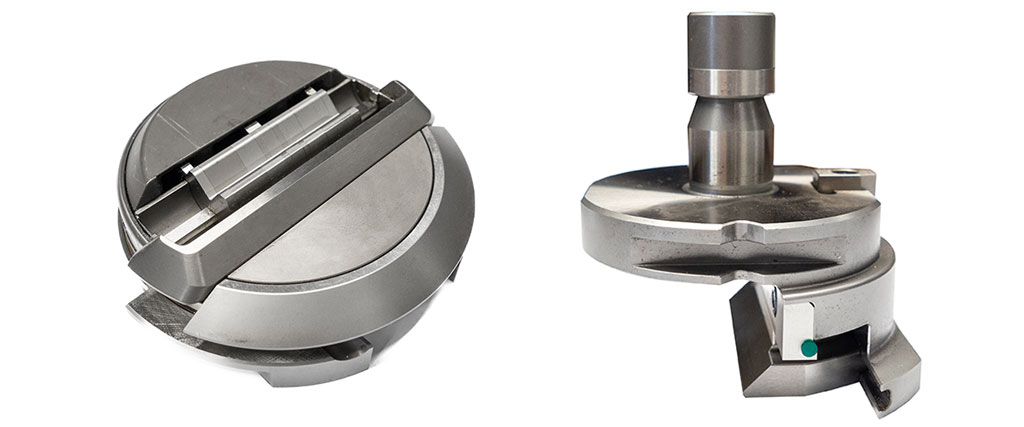
Besides punching and laser cutting, our punch laser machine can also make small bends in the sheet metal. For this we use different variants of the Trumpf Multibend tool.
Video of bending on a punch laser
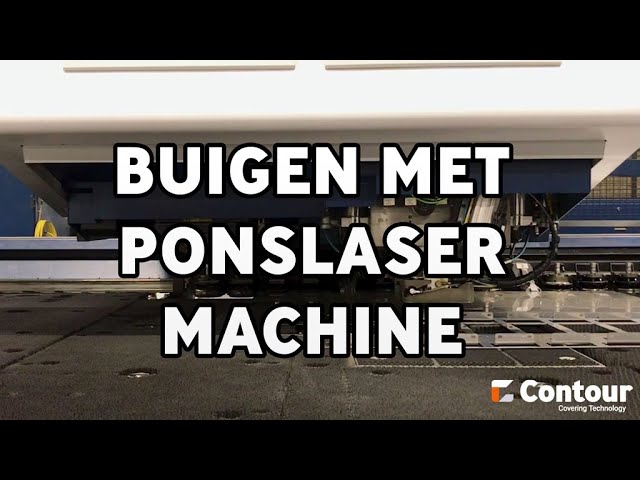
With the Multibend tool we can bend small flanges on our fully automatic Trumpf TruMatic 7000 punch laser machine.
Sources
- Internal process documentation and experience
- Machine documentation from the manufacturer Trumpf