

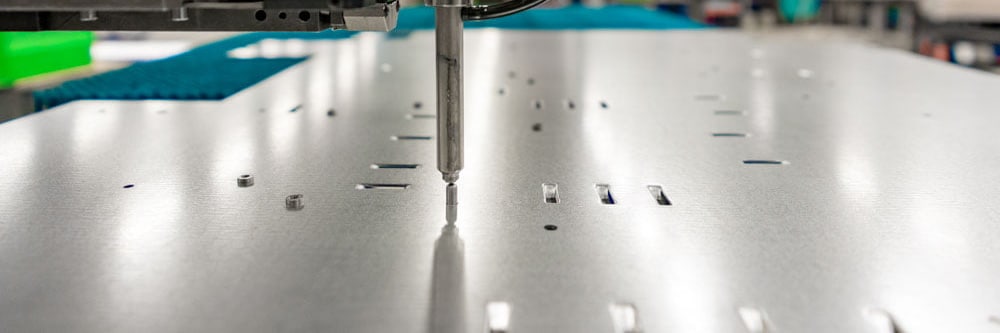
PEM fasteners and self-clinching nuts
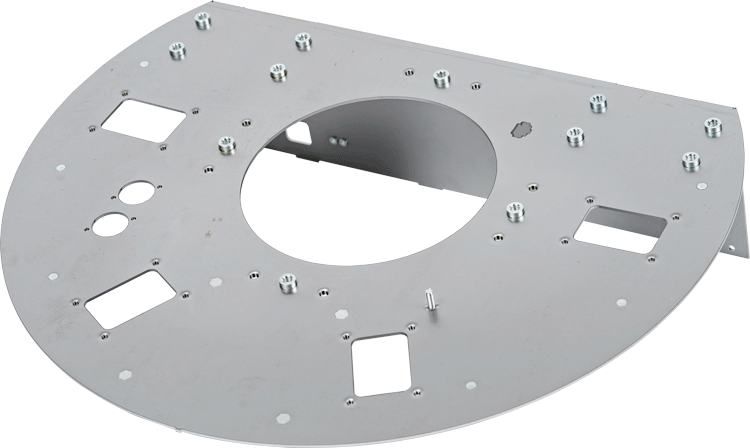
Self-clinching fasteners, often called inserts, are small metal fasteners such as self-clinching nuts, self-clinching studs and self-clinching threaded studs. These self-clinching fasteners can be pressed into sheet metal with a self-clinching machine. Pressing in, also called clinching, takes place in a hole that was punched or laser-cut into the sheet metal beforehand.
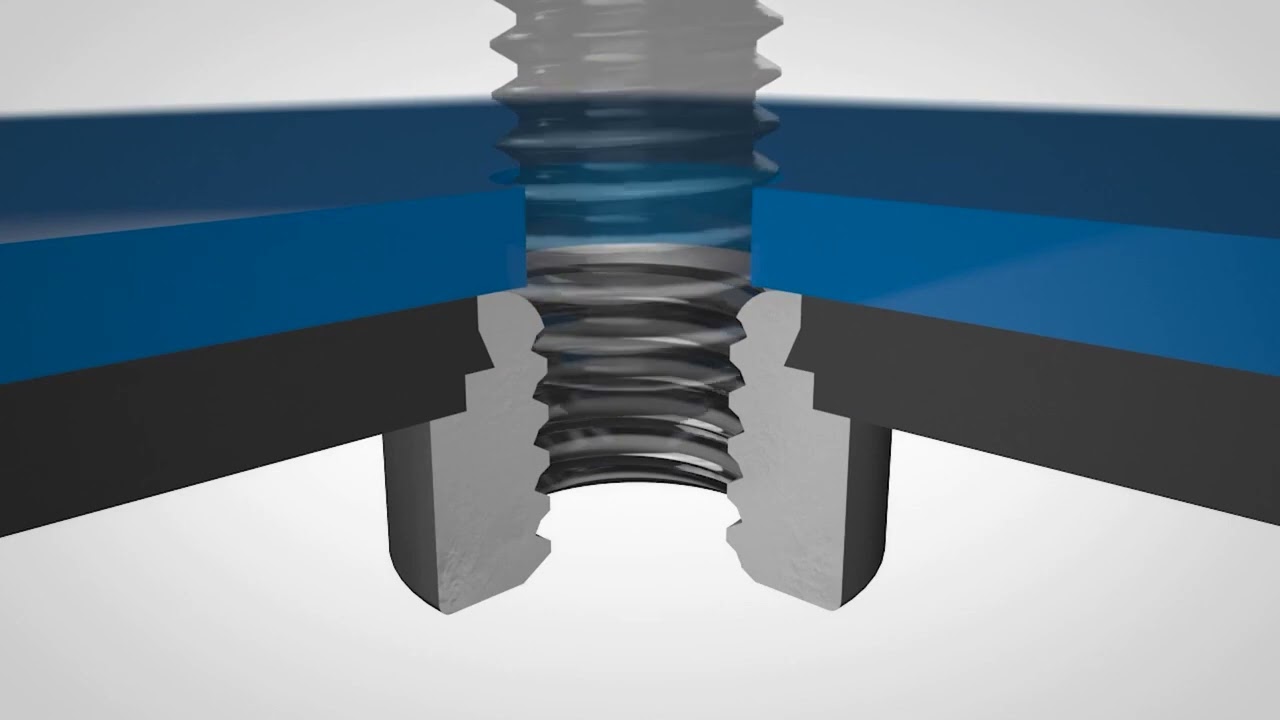
The self-clinching fasteners have a collar. During pressing, this collar bites into the inner contour of the hole in the sheet.
Looking for a sheet metal supplier that can also install self-clinching nuts for you? Contact us right away!
+31 (0)543 54 67 89 Request a quote
Advantages
- PEM self-clinching nuts can take more force than a tapped hole in sheet metal. When the surface of the sheet metal has to stay completely flat on both sides, self-clinching nuts can also be used that clinch into the sheet entirely within the sheet thickness.
- There is no heat-affected zone: pressing in is a cold process, so no thermal load, discoloration or corrosion occurs in the material.
- Compared to weld nuts, self-clinching nuts can easily be used in all kinds of materials. This is also true when the self-clinching fastener is made of a different material than the sheet metal it is pressed into. They can be installed in carbon steel, stainless steel, aluminum and magnesium, among others. Self-clinching nuts can be used without having to determine weld parameters that are hard to establish.
- A self-clinching nut results in a liquid-tight seal.
- PEM inserting is a clean process, with no risk of spatter from welding.
PEM
PEM is the best-known brand of self-clinching fasteners. It is part of PennEngineering. PEM carries an extensive catalog of all kinds of fasteners such as nuts, studs and threaded studs. These fasteners are available in all shapes and sizes, so they can be used in all common sheet thicknesses.
PEMSERTER
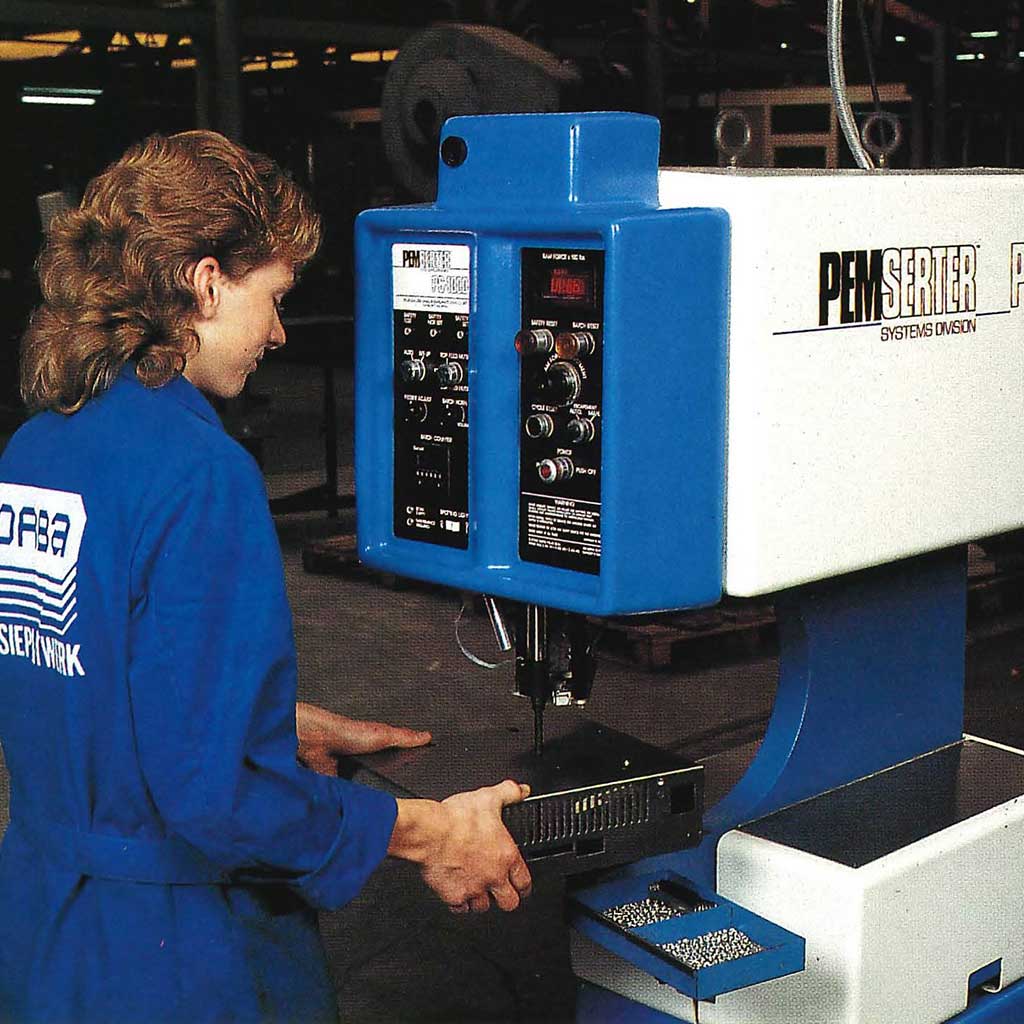
The PEM fasteners can be pressed into sheet metal with a PEMSERT machine. We also call this machine a PEMSERTER. At Contour, we call the pressing-in process PEMSERTING.
The PEMSERTER is typically used before or after bending. At Contour, the PEMSERTER is therefore set up in the department next to the press brakes. The best moment to carry out the PEMSERT operation depends on the batch size, the geometry of the sheet, the geometry of the self-clinching machine and the geometry of the press brake.
The PEMSERT operation must be taken into account when designing the sheet metal part. In flat or bent condition, the part must fit in the PEMSERT machine so that the hole in the sheet where the self-clinching fastener goes lies within the reach of the press head and anvil of the self-clinching machine.
When the bent product does not fit in the PEMSERT machine because of its geometry, for example because the anvil and press head cannot reach the location of the PEM after bending, the PEM can be installed in the flat sheet. Installing the PEM in the flat sheet can also have advantages for high-volume production, because the flat sheet is easy to stack and easier to move logistically.
If the product still has to be bent after the self-clinching nuts have been installed, the design must carefully take into account that the nuts may collide with the press brake or the bending tool.
PEMSERTER video
Operating principle
The video below visualizes the operating principle of a self-clinching nut in sheet metal. During clinching, the material that the self-clinching fastener is pressed into is displaced by the collar of the self-clinching fastener. Because of the force applied by the PEMSERTER, the sheet material flows around the grooves and recesses in the self-clinching fastener. This anchors the self-clinching nut firmly in the sheet material.
PEMSERT self-clinching machine
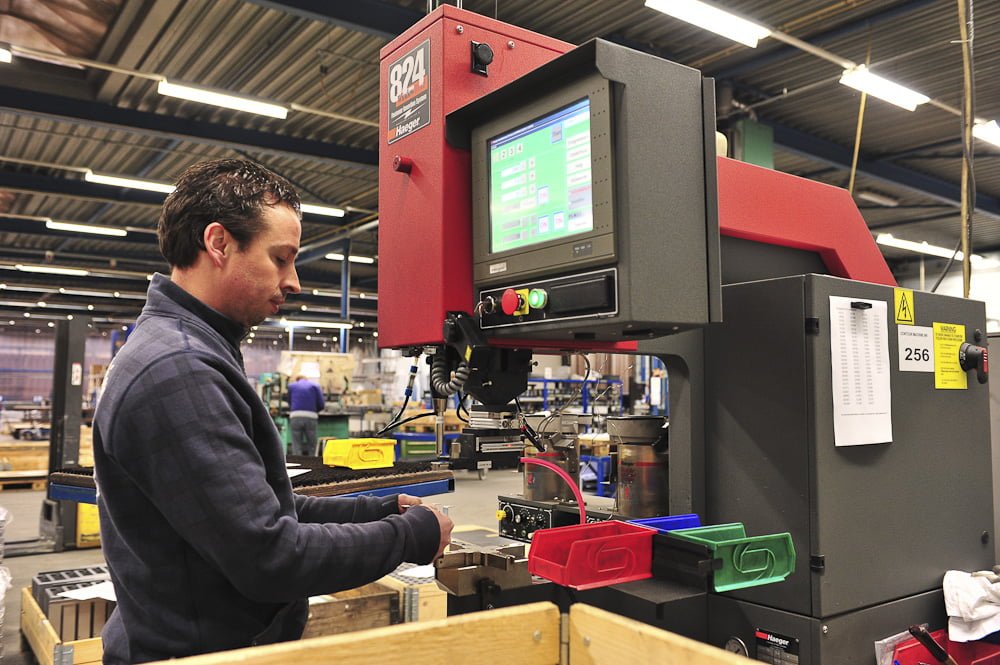
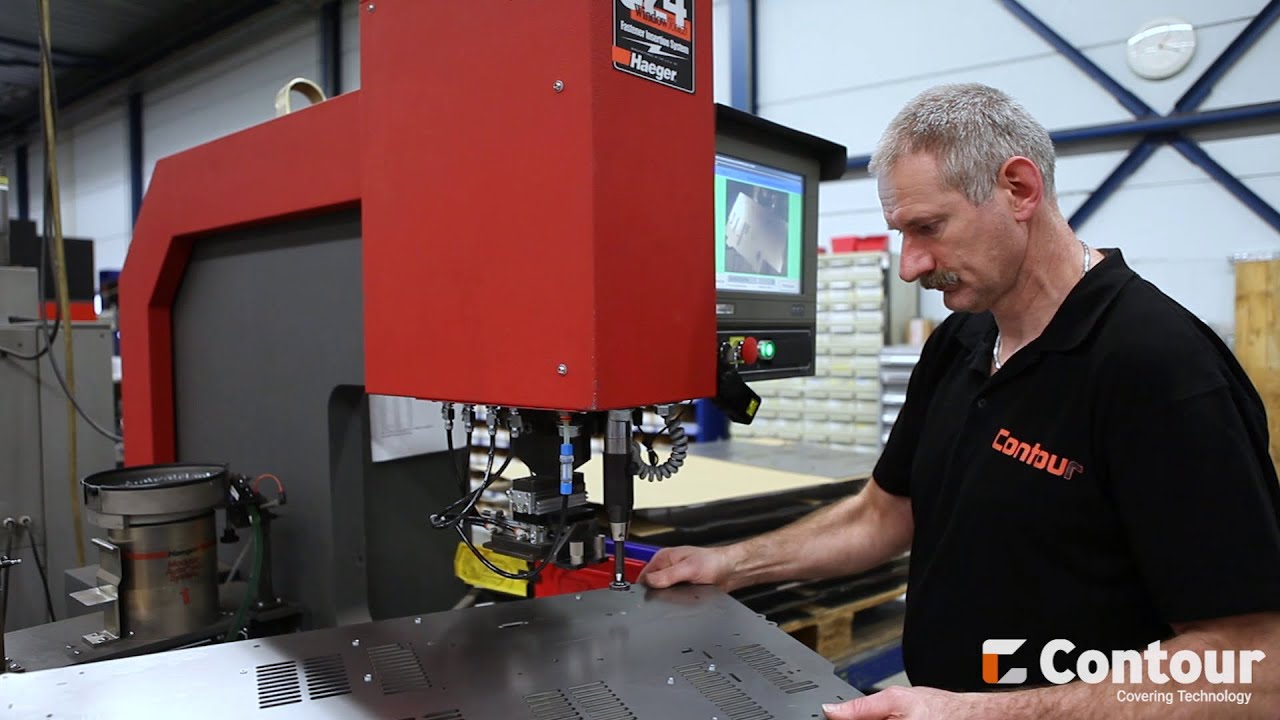
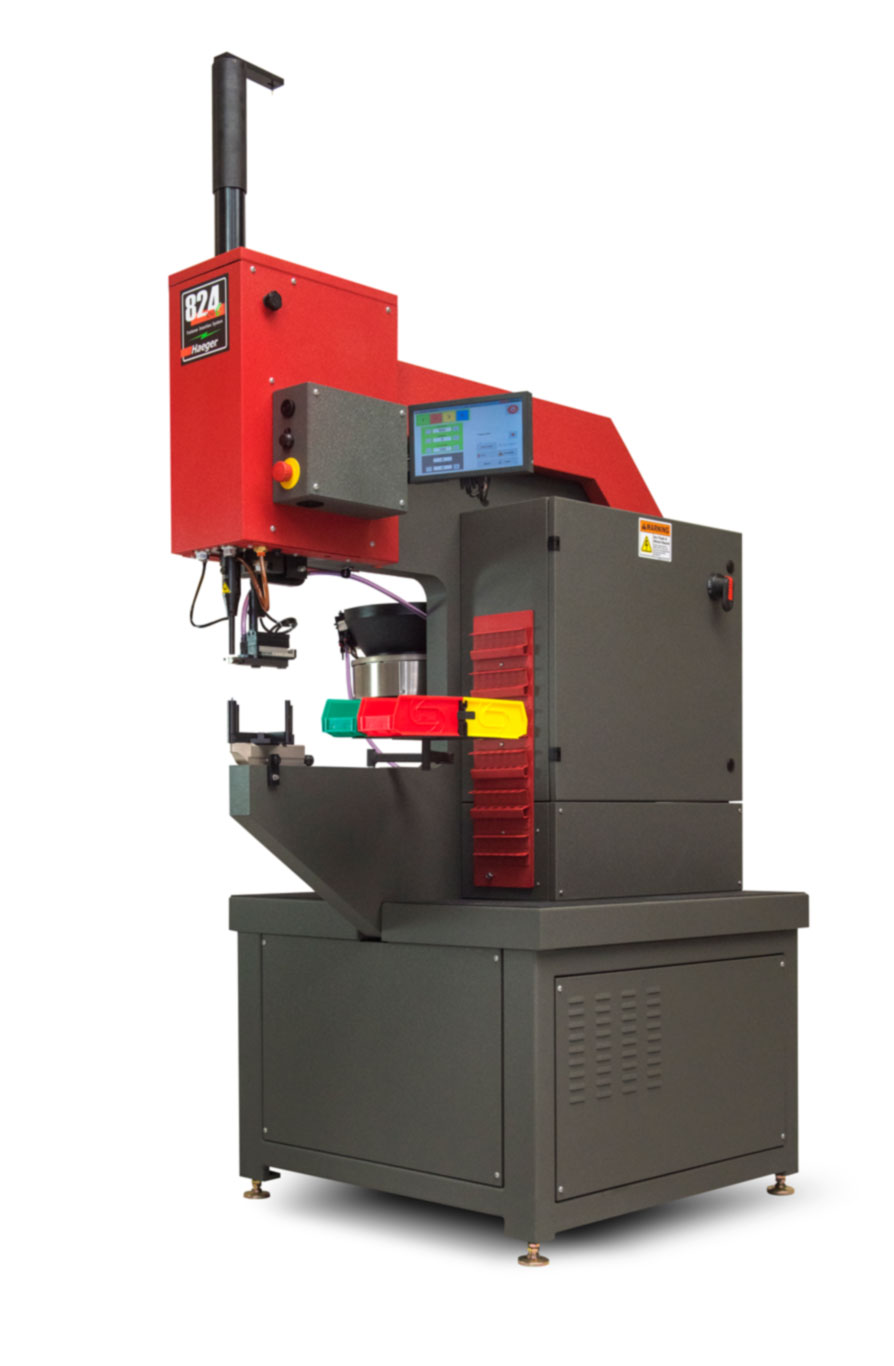
Contour uses Haeger PEMSERTER self-clinching machines. The machines are equipped with automatic feeding of the self-clinching fasteners up to the press head. The required self-clinching fasteners can be loaded into a vibratory bowl feeder, which supplies a new self-clinching fastener to the head each time the previous insert has been pressed into the sheet metal.
The PEMSERT machine is CNC-controlled and has a control system with a touchscreen. A CNC program is created and saved for reuse for each part. The machine thus indicates exactly how many and which inserts have to be installed in the part. The program can be extended with photos so that the required instructions appear visually on the touchscreen. This reduces the chance of errors and makes the work easier for our CNC operators.
Production process
These are the process steps for pressing a PEMSERT self-clinching fastener into sheet metal.
- The operator selects the correct CAM program. They can call it up from the network via the touchscreen. If the program does not exist yet, the operator creates it and saves it in the machine.
- The operator checks the CAM program against the bill of materials of the assembly in the production order. This bill of materials specifies the part numbers of the self-clinching nuts to be pressed in. The operator then places the correct self-clinching nuts in the vibratory bowl feeder(s).
- The program is started and the machine feeds the correct self-clinching nut to the press head.
- The operator positions the sheet metal part so that the hole where the self-clinching fastener has to go is exactly on the anvil under the press head. Depending on the type of self-clinching fastener, positioning can be made easier by placing the hole over a pin protruding from the lower tooling or onto the insert in the anvil.
- When a foot pedal is pressed, the press head closes, which clinches the self-clinching fastener into the sheet.
- The press head opens after the press force set in the CAM program has been applied and the set dwell time has elapsed. The cycle repeats until all self-clinching fasteners in the part have been pressed in.
Sources
- Internal process documentation and experience
- Haeger machine documentation