

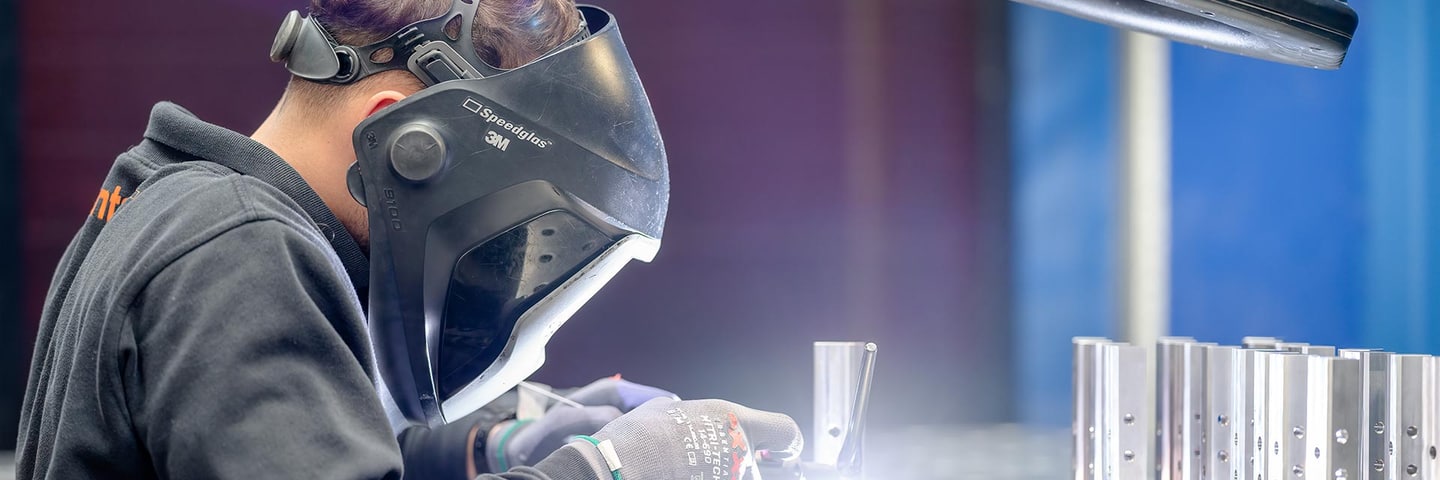
TIG welding
TIG welding is a welding technique that is well suited to welding thin sheet metal. Contour therefore uses this technique often in the production of welded assemblies.
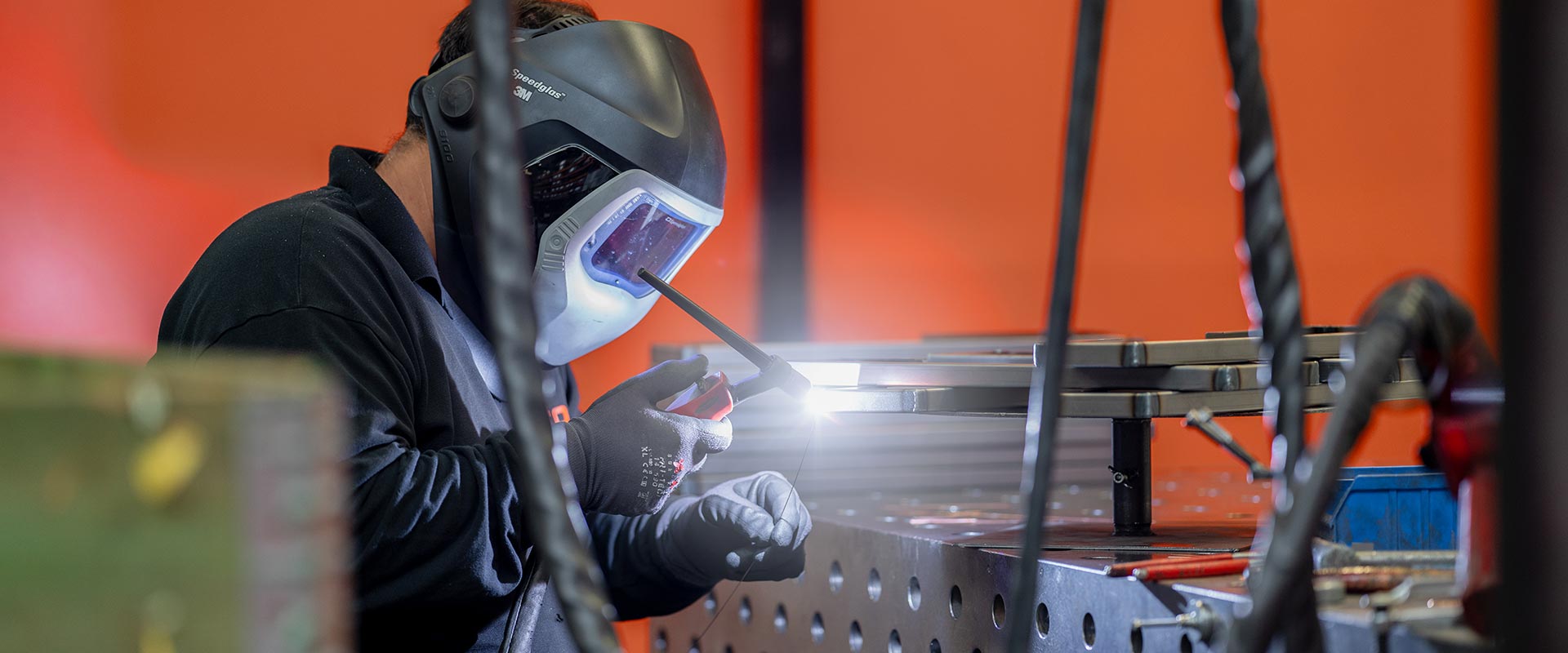
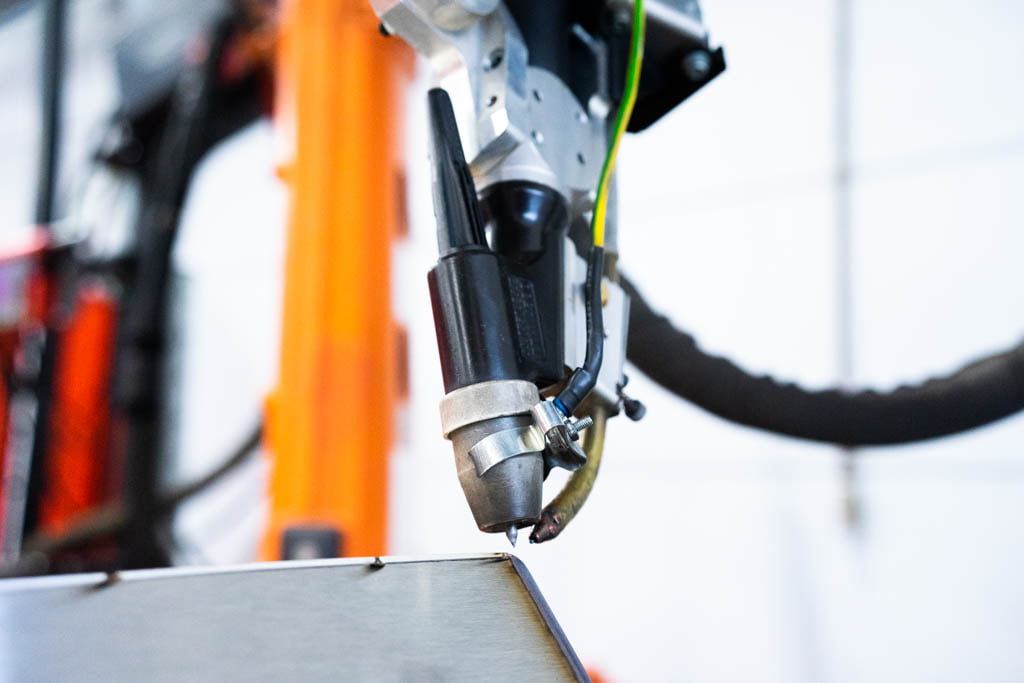
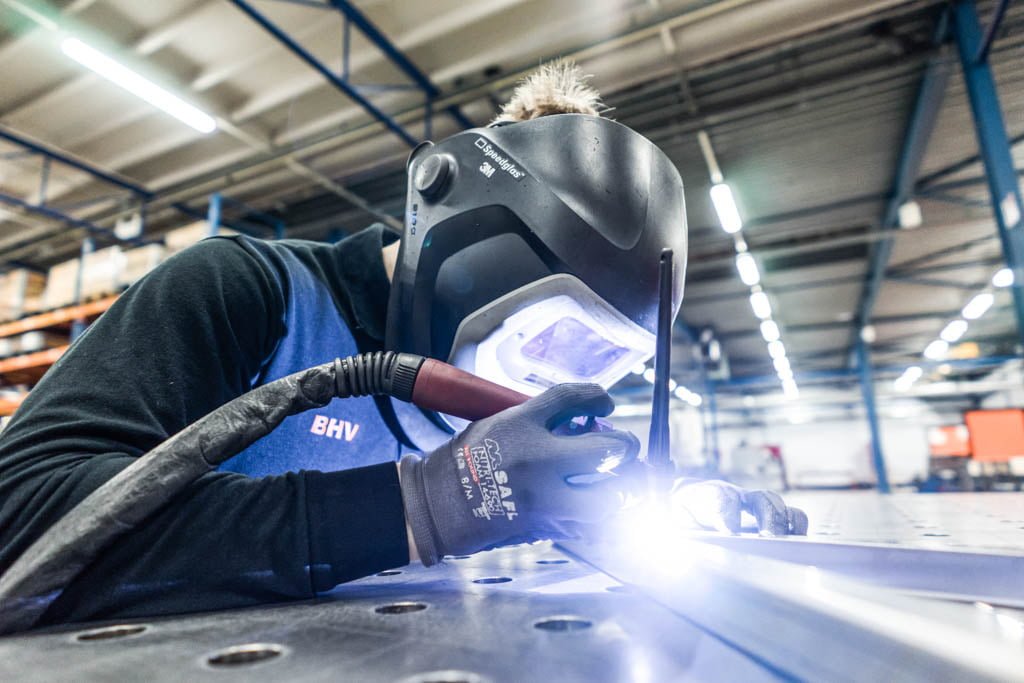
TIG welding uses a welding torch with a tungsten electrode. From this electrode, an arc is built up to the workpiece to be welded. The arc reaches a very high temperature, which melts the material of the workpiece. In this way, the separate parts of the welded assembly are fused together.
From the welding torch, this arc is surrounded by an inert gas. An inert gas cannot burn and does not react with other substances. Surrounding the arc with this gas therefore prevents contamination of the weld.
The abbreviation TIG stands for Tungsten Inert Gas. Tungsten is the material the electrode is made of.
Contour specializes in precise sheet metal. We make sure the individual parts of the welded assembly fit together tightly, so that in most cases we only have to flow the material of the welded components together. That is to say, without adding extra material during the welding process. The end result is a clean, precise weld that needs very little finishing.
Curious what we can do for you and your metal products? Contact us right away!
+31 (0)543 54 67 89 Request a quote
TIG welding video
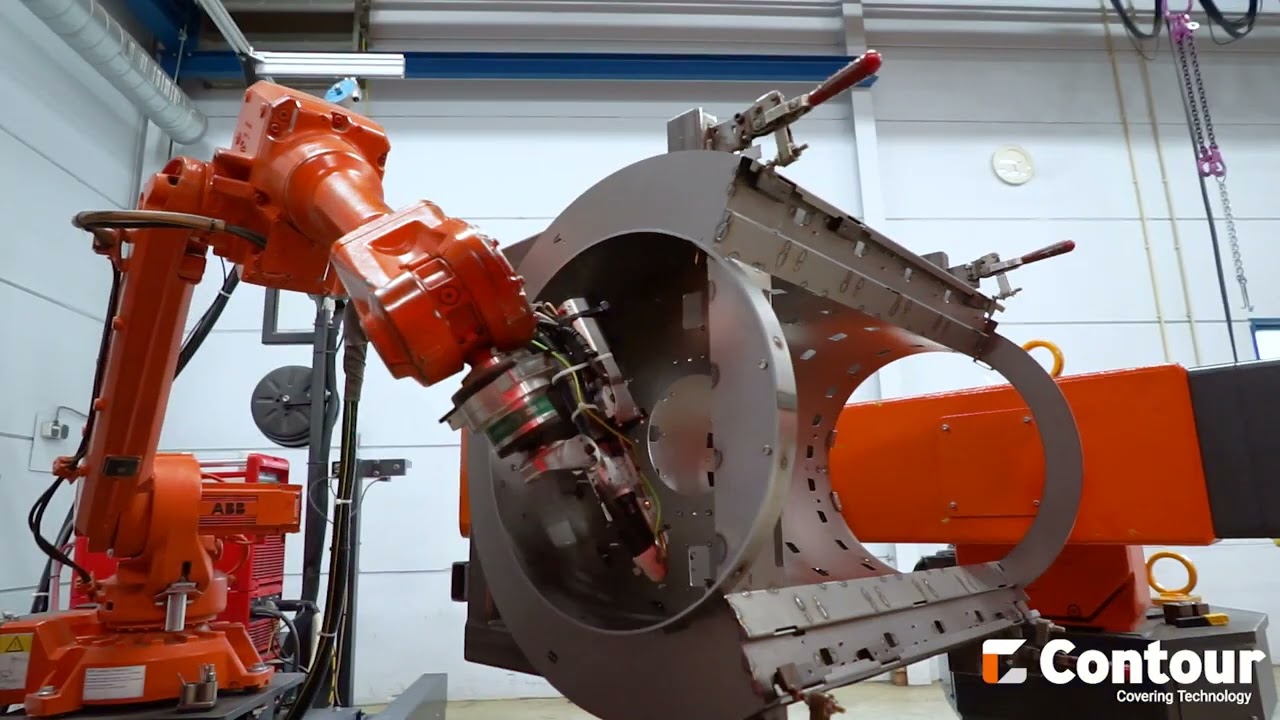
The video below shows what TIG welding looks like in practice at Contour.
Quality of TIG welding
TIG welding is known for the excellent quality of its welds. Thanks to the precision and control during the welding process, TIG welding results in welds with a number of remarkable properties.
One of the most important aspects of TIG weld quality is the neatness of the weld. Because the arc can be controlled so well, the welder can work accurately and in a controlled manner, even on thin sheet metal. This results in narrow welds with high accuracy and an attractive finish. Because of these neat welds, there is often less need for finishing, which saves time and costs.
In addition, TIG welded joints generally show minimal discoloration, distortion, and contamination. The slow and controlled welding process keeps the heat input limited, which considerably reduces the risk of distortion of the workpiece. Moreover, shielding the weld pool with inert gas also minimizes the risk of oxidation and unwanted contamination in the weld.
The mechanical properties of TIG welded joints are generally excellent. The welds have high strength and good resistance to fatigue. TIG welds can also produce some of the most corrosion-resistant welds, which makes them suitable for applications where durability and reliability are critical.
The quality of TIG welds is also influenced by the skill and experience of the welder. It takes a certain level of expertise to determine optimal welding parameters and set up the welding equipment correctly. In addition, the welder’s technique and manual skill play an important role in achieving high-quality welds.
Advantages of TIG welding
- High precision: TIG welding offers greater precision and control over the welding process. This makes it ideal for welding thin materials and creating attractive welds.
- No weld spatter: Compared to MIG/MAG welding, TIG welding produces little or no weld spatter. This makes finishing the welds easier and minimizes the risk of damage to surrounding surfaces.
- Lower heat input: TIG welding has a lower heat input than MIG/MAG welding. This is especially beneficial when welding thin sheet metal, because it reduces the risk of distortion or burn-through of the material.
- Suitable for various materials: TIG welding is suitable for welding a wide range of materials, including steel, stainless steel, aluminum, copper, and titanium. This makes it a versatile choice for different applications.
- Better control over welding parameters: In TIG welding, the welder can set the current, voltage, and gas flow precisely. This allows the welder to optimize the welding parameters for the specific requirements of the workpiece.
- Excellent weld quality: TIG welding is known for its high weld quality. The welds are well penetrated and show minimal porosity and imperfections. This contributes to the durability and reliability of the welded joints.