

Laser cutting
Are you looking for an experienced supplier for your laser-cut parts? At Contour we focus on the best laser cutting service, available 24/7 and with unattended production capabilities. Our goal is not only to meet your requirements, but also to exceed the highest quality standards.
We process about 120,000 m² of metal every year, which is 260 sheets per day. Every sheet is processed with the utmost precision and care. This is only a glimpse of what we can deliver. We have invested in two punch-laser combinations and two flatbed lasers. We have enough capacity to deliver quickly and reliably.
How do we work?
Thanks to our fully automatic warehouse, we can efficiently manage more than 770 pallet positions. The system handles the fully automatic supply of sheets and removal of laser-cut components. Our production line is optimized to deliver your project on time.
Whether you need stainless steel, steel, zincor, sendzimir or aluminum, we can laser cut almost any material. We have experience with exotic materials and are prepared to meet your specific requirements.
Do you want to understand the laser cutting process better? On this page we explain everything you need to know about how we work when laser cutting.
Why choose laser cutting?
Laser cutting, an innovative technique for shaping sheet metal, is both fast and accurate. The advantages include:
- Extensive design freedom
- No punching transitions
- Minimal material loss
- No burning on the cut edge
- Increased production speed
Video
Our laser cutting machines
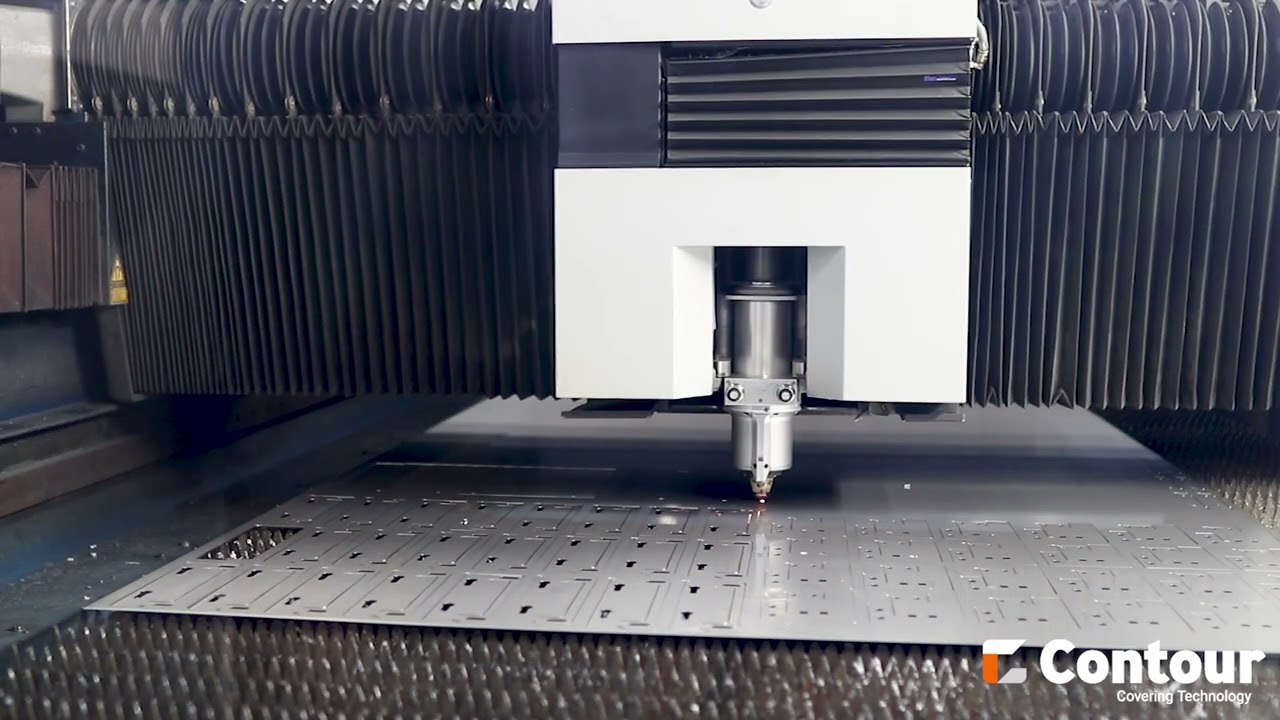
Our range of laser cutting machines includes a flatbed laser and two punch-laser combinations. Both machines have a CO2 laser source with a cutting head.
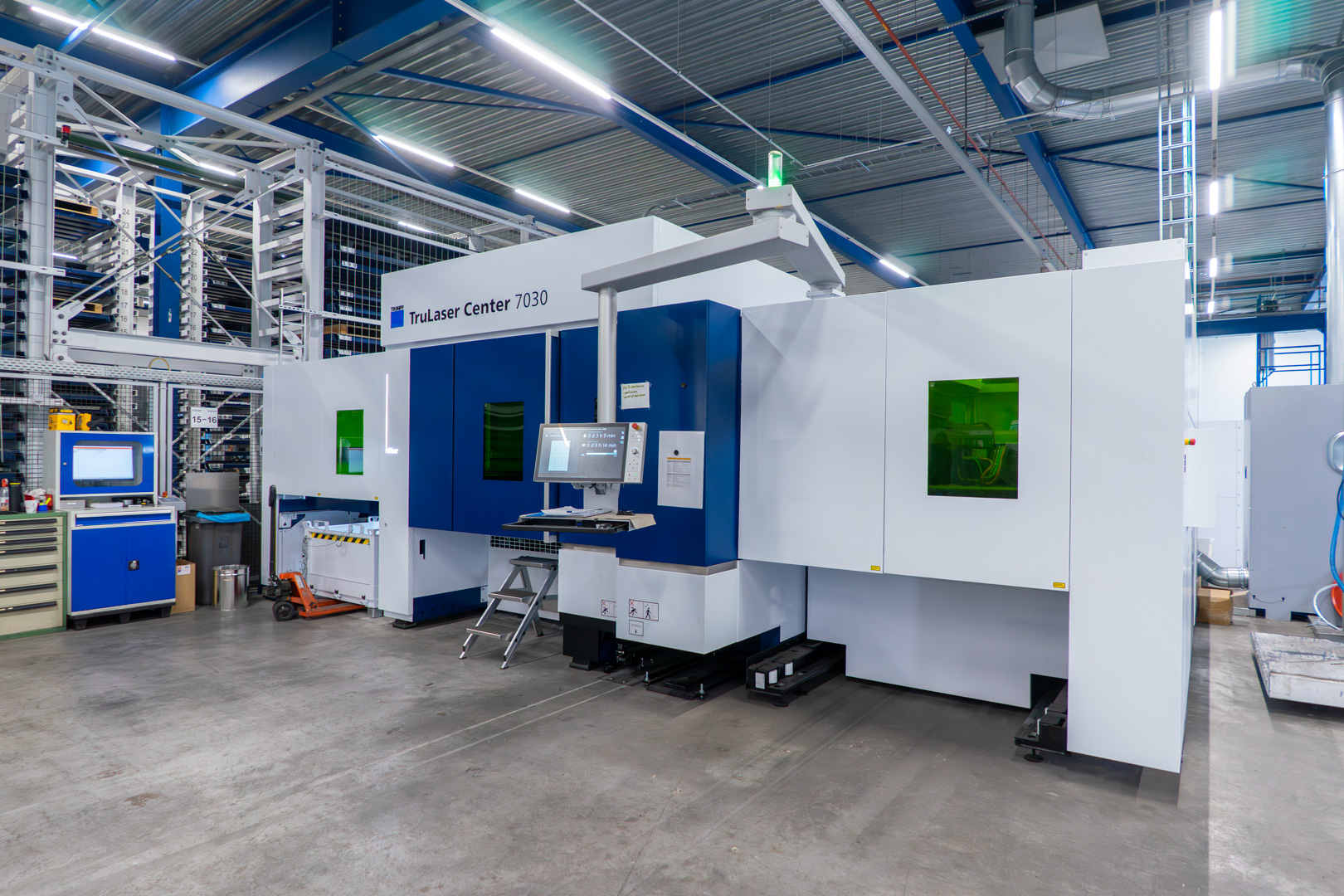
Flatbed laser: Trumpf TruLaser Center 7030
The Trumpf TruLaser Center 7030 is a fully automated flatbed laser for fast, accurate and reliable cutting of sheet metal. The machine combines a clamp manipulator, which moves the sheet over a brush bed, with a cutting head that has an additional X and Y axis. This smart combination makes high cutting speeds and very efficient production possible.
An important advantage of this machine is its high process reliability. The brush bed and the SmartGate system support the sheet optimally during cutting, which keeps tilting parts, collisions and post-processing to a minimum. Small cut parts can be ejected downward automatically and safely and collected in bins.
The TruLaser Center 7030 also has a fully automatic product sorting system. With suction cups and smart support pins, small, complex or fragile parts are also removed reliably from the remaining sheet. Larger parts can be sorted automatically and stacked on pallets.
Thanks to the extensive automation, from loading and cutting to sorting and unstacking, the machine is particularly suited to efficient series production with short lead times and consistent quality.
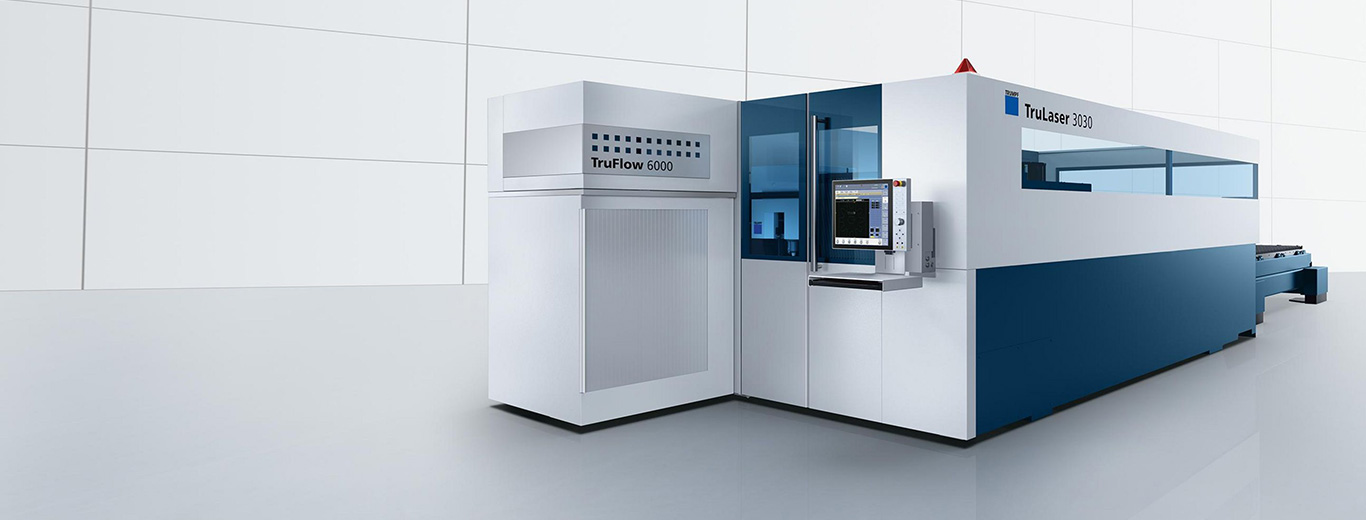
Flatbed laser: Trumpf 3030L
With this flatbed laser, the sheet to be cut stays still on the stationary cutting bed. During laser cutting, the cutting head moves over the sheet metal to cut the contours. We call this mechanism a “flying optic”, because the cutting head “flies” over the sheet that lies still.
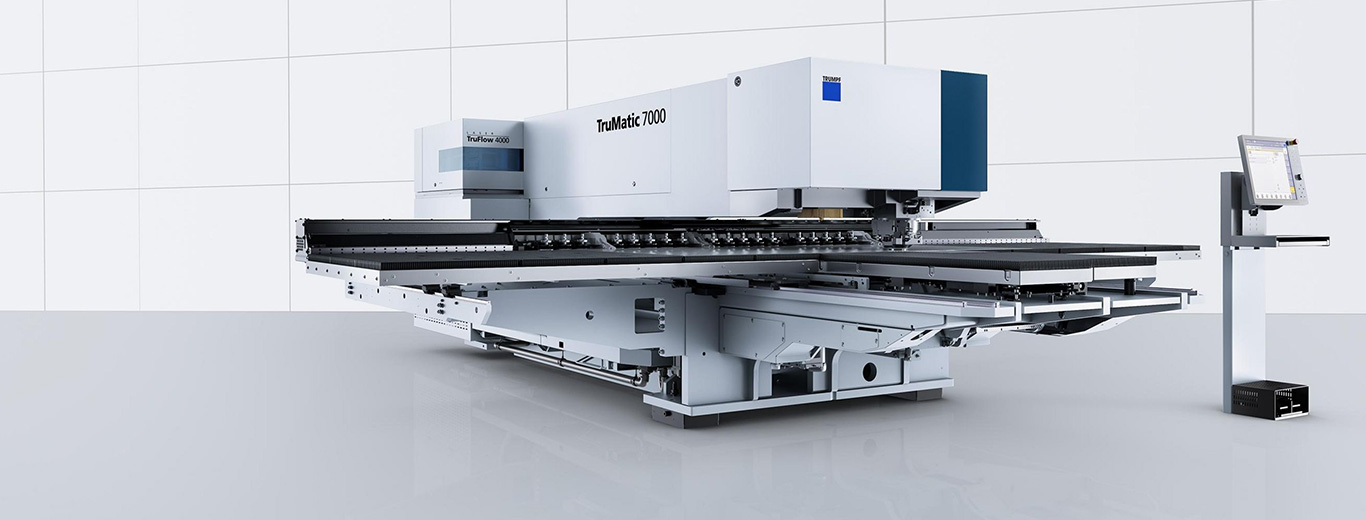
Punch-laser combination: Trumpf TruMatic 7000
With this versatile machine, it is the metal sheet to be cut that moves. Next to the laser head there is also a punch head. This punch head can punch holes in the sheet and also carry out all kinds of smart operations, such as tapping threads and forming the sheet.
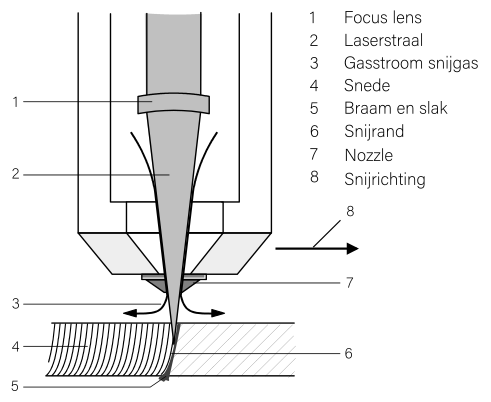
Schematic overview of laser cutting
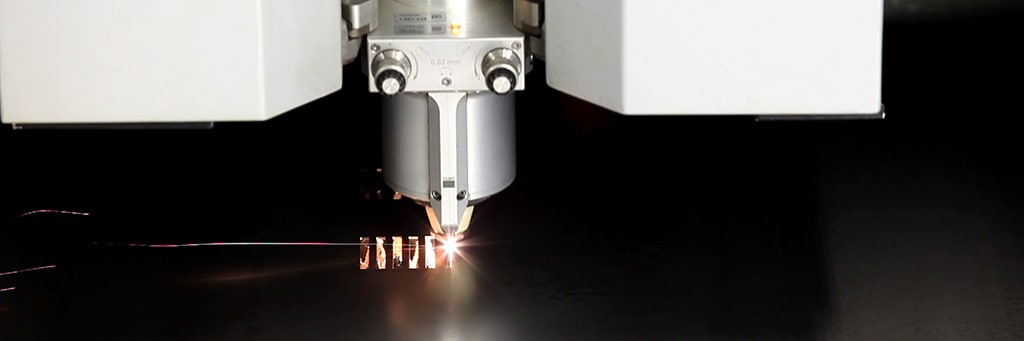
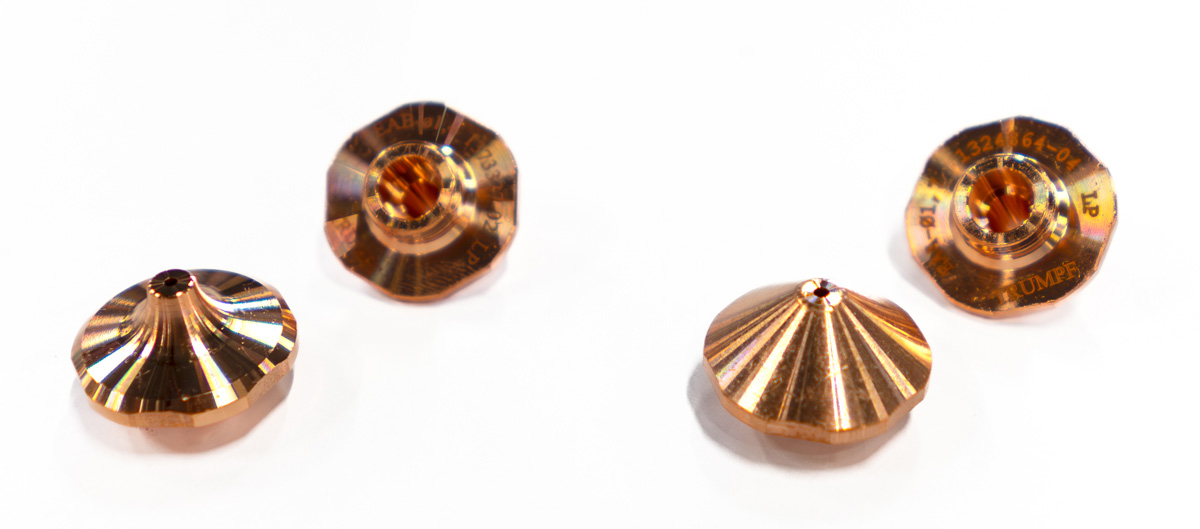
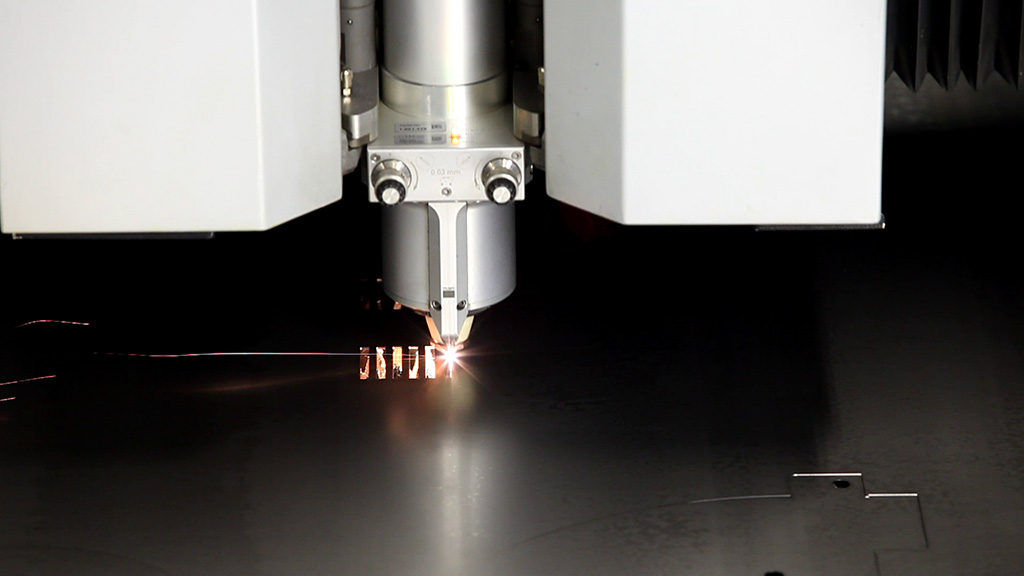
A laser cutting machine focuses the laser beam on the sheet metal with a lens. The focal point is set precisely to get the narrowest possible cut. In many cases this makes post-processing such as deburring unnecessary. A nozzle surrounds the laser beam with a cutting gas. The cutting gas drives the molten material out of the cut. Different types of cutting gas can be used.
Pioneer in laser cutting
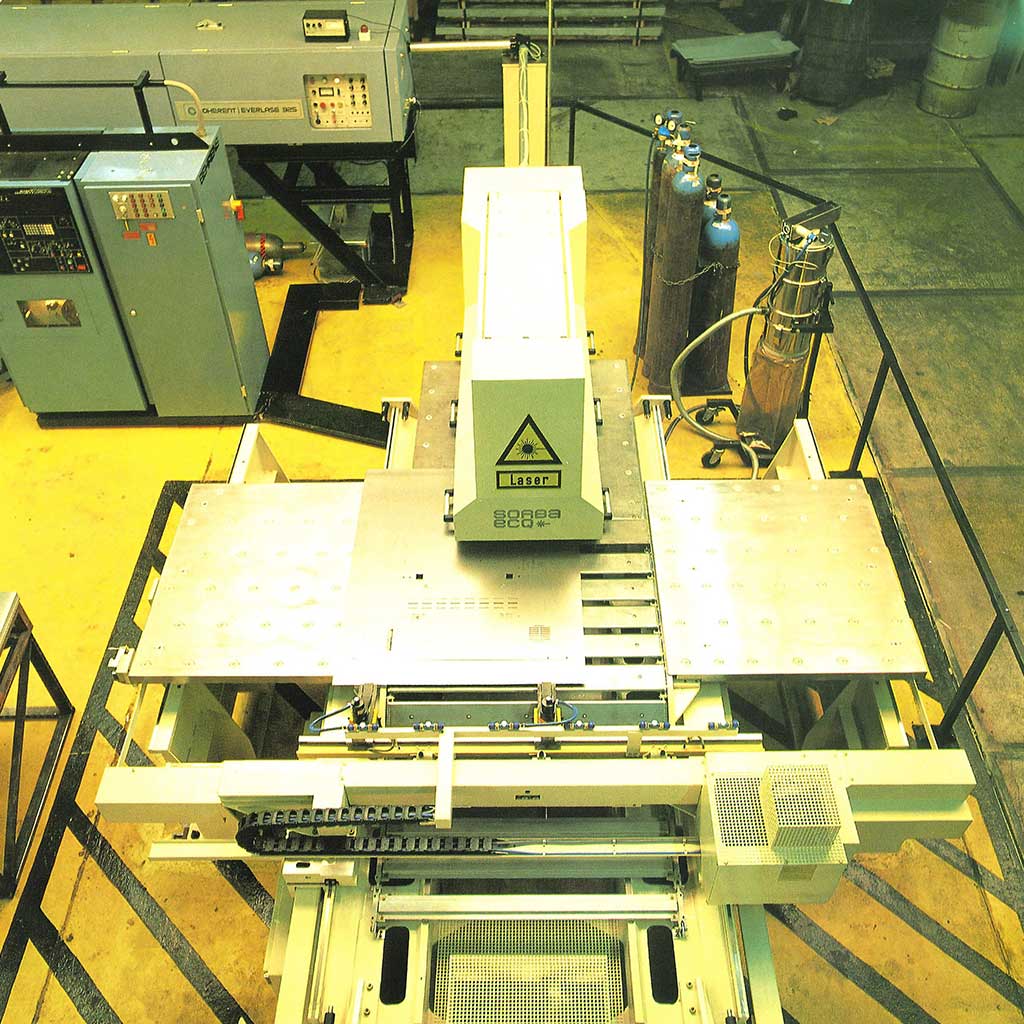
At Contour we were early! As far back as 1981, we were pioneers in laser cutting, with one of the first laser cutting machines in the Netherlands.
Our ability to innovate and lead in technology has meant that we consistently deliver high-quality laser cutting.
Focus & lens
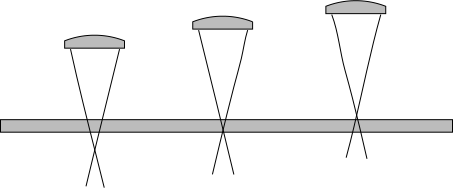
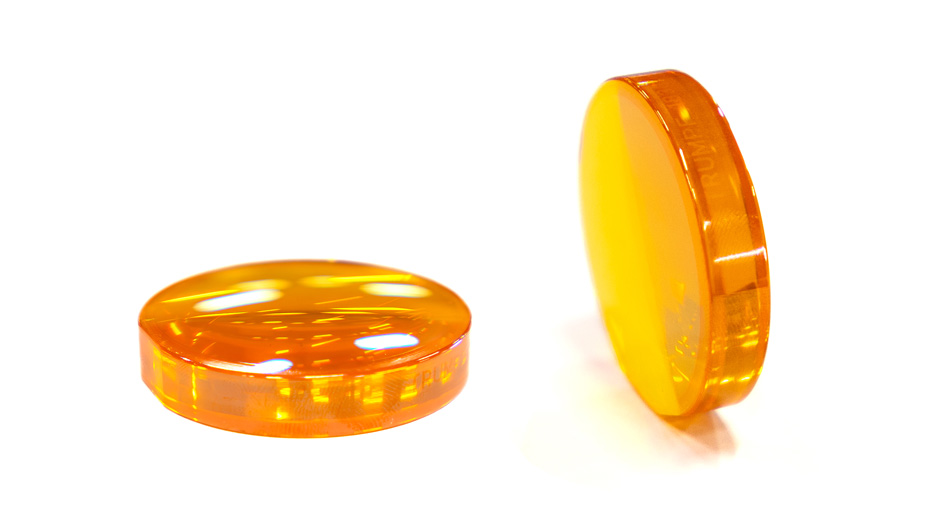
In the cutting head of a laser cutting machine, the laser beam is focused with a lens with a fixed focal length. At the focal length the laser beam is at its thinnest and the energy density at its highest. (Comparable to igniting paper with sunlight and a magnifying glass.)
The focal length is an important setting that affects the quality of the cut edge of the cut product. The laser cutting machines constantly measure the distance from the cutting head to the sheet to be cut. The height of the cutting head is adjusted based on this information. In this way, the height position of the focal point relative to the sheet to be cut is kept as stable as possible.
CAD-CAM, MES & CNC
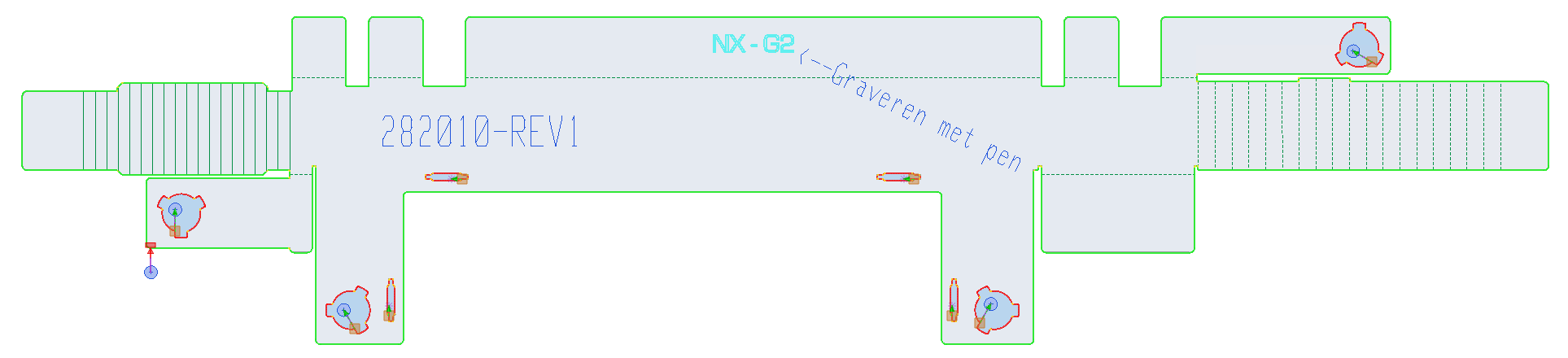
With CAD-CAM software we translate our customers’ CAD files into CNC programs. The CNC programs contain the cutting parameters and coordinates for the cutting head.
Every product gets its own CNC program in a revision management system. For repeat orders, the product is cut in exactly the same way every time. This is how we deliver consistently high quality.
The CNC programs are programmed offline while the machine is producing. The MES software reads the current production demand from our ERP package and combines the orders to be cut in an optimal nesting on each sheet.
Laser technology: CO2 and fiber lasers
Laser is an acronym and stands for Light Amplification by Stimulated Emission of Radiation. Laser light is a form of electromagnetic radiation. The technique is particularly suited to metalworking because of three properties: the light is monochromatic, coherent and directional. These properties make it possible to aim the laser light precisely at a very small, focused spot. The most commonly used laser types for sheet metal fabrication are the CO2 laser and the fiber laser, each with its own specific advantages.
Laser cutting FAQ
What is laser cutting?
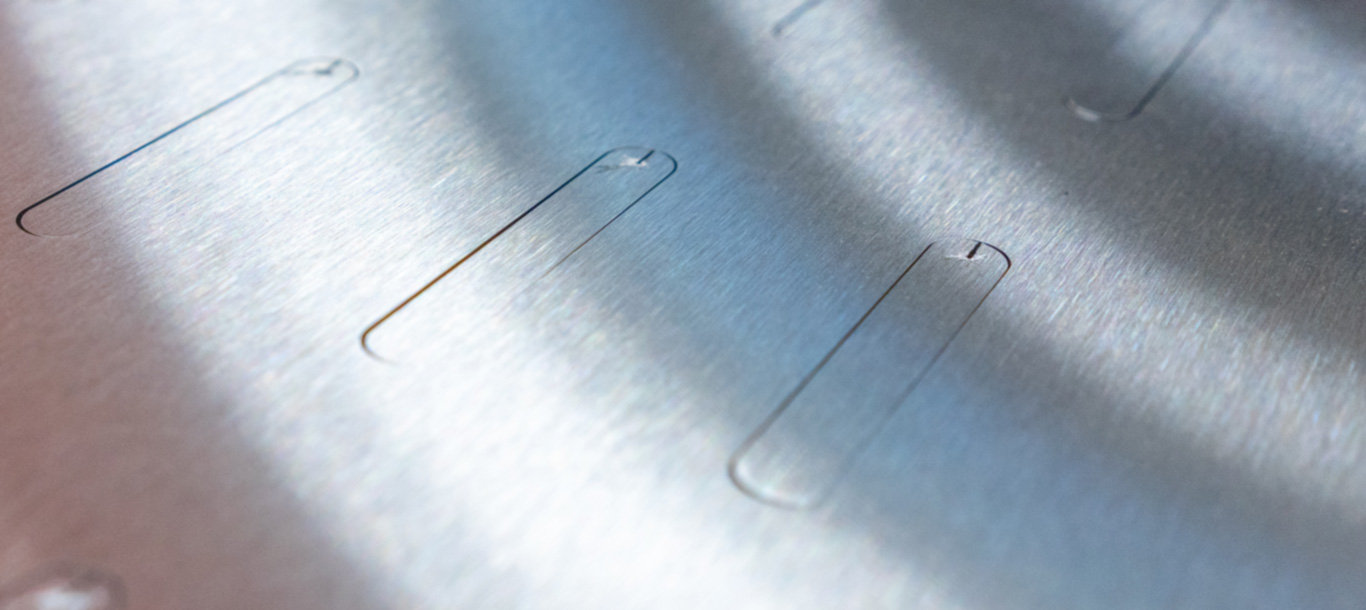
Laser cutting is a form of sheet metal fabrication in which contours are cut from sheet metal. The advantage of laser cutting is the high degree of freedom of shape compared to punching.
During cutting, the laser beam is surrounded by a cutting gas. The cutting gas blows the molten material out of the cut. Typically nitrogen or oxygen is chosen as the cutting gas. Inert nitrogen is chosen when burning and discoloration of the metal must be avoided as much as possible. Oxygen, on the other hand, promotes the burning process, so thicker material can be cut at a higher speed. Because of this burning process, more post-treatment is needed after cutting before the material can be processed further.
Sources
-
Process documentation and experience built up since the 1950s
-
Machine documentation and course material from Trumpf Nederland BV