

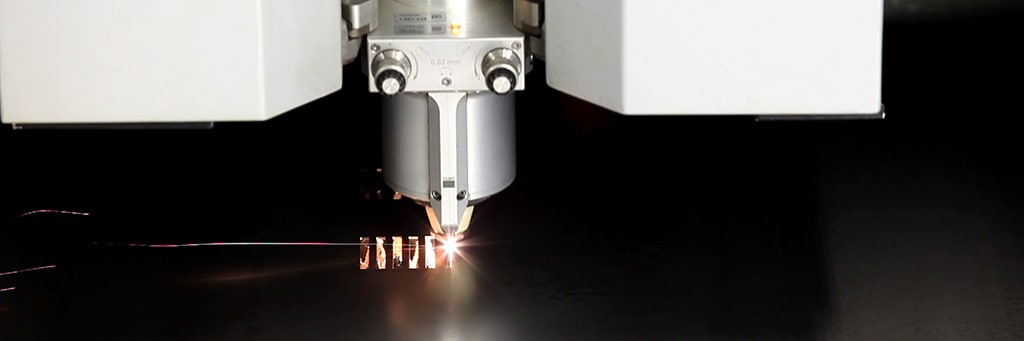
Cutting gases in laser cutting
In laser cutting, the cutting gas plays an indispensable role. The laser beam melts the metal locally; the cutting gas is carried through the cutting head and blows the molten material out of the kerf. This way the material re-fuses with the workpiece as little as possible and burr formation stays limited.
The choice of cutting gas helps determine the cutting speed, the maximum sheet thickness, the gas consumption and above all the quality of the cut edge. The choice is usually made between nitrogen, oxygen and compressed air. At Contour, we work exclusively with nitrogen, for a clean, oxide-free cut edge that is immediately suitable for follow-up operations such as welding or powder coating.
The three cutting gases
Nitrogen (N₂)
Nitrogen is an inert gas: it barely reacts with the heated metal. The laser melts the material and the nitrogen blows the melt away. This usually happens under high pressure, often between 10 and 30 bar, depending on material, thickness and cutting head. Because no oxygen reaction takes place, the result is a clean, oxide-free cut edge that does not discolor or get contaminated. The cut edge is immediately suitable for painting, powder coating or welding; deburring or edge breaking may still be needed for geometric or functional reasons. Nitrogen requires a higher gas flow and higher pressure than oxygen and sometimes cuts thick structural steel more slowly, but it gives the cleanest cut edge. It is the common cutting gas for stainless steel and aluminum, and it is also used for structural steel where an oxide-free edge is wanted.
Oxygen (O₂)
With oxygen, cutting is reactive: the molten steel reacts with the oxygen. This combustion process (an exothermic reaction) supplies extra energy, so with the same laser power higher cutting speeds or greater material thicknesses can be achievable. Oxygen is mainly used for structural steel; for stainless steel and aluminum it is usually unsuitable when a clean edge is required. The drawback is an oxide skin on the cut edge. This oxide layer hinders the adhesion of powder coating and can disturb welding, and in many cases it has to be removed. Oxygen therefore gives a less clean cut, but one that is sometimes efficient on thick steel.
Compressed air
Compressed air consists of about 78% nitrogen and 21% oxygen. It is often the cheapest cutting gas, because it can be generated on site with a compressor instead of being purchased as gas. For laser cutting, the air must be dry, clean and oil-free; ordinary workshop air is not simply suitable for this. The oxygen content causes slight oxidation of the cut edge. Compressed air is therefore mainly suitable for thinner sheet or applications where slight discoloration and a somewhat less clean edge are acceptable.
Cutting gases compared
| Cutting gas | How it works | Cut edge | Typical application |
|---|---|---|---|
| Nitrogen (N₂) | Inert, blows the melt away | Clean, oxide-free, immediately paintable and weldable | Stainless steel, aluminum and clean structural steel |
| Oxygen (O₂) | Reactive, supplies extra energy with steel | Oxide skin, often post-processing | Thick structural steel |
| Compressed air | Dry, clean mixture of N₂ and O₂ | Slightly oxidized | Thin sheet |
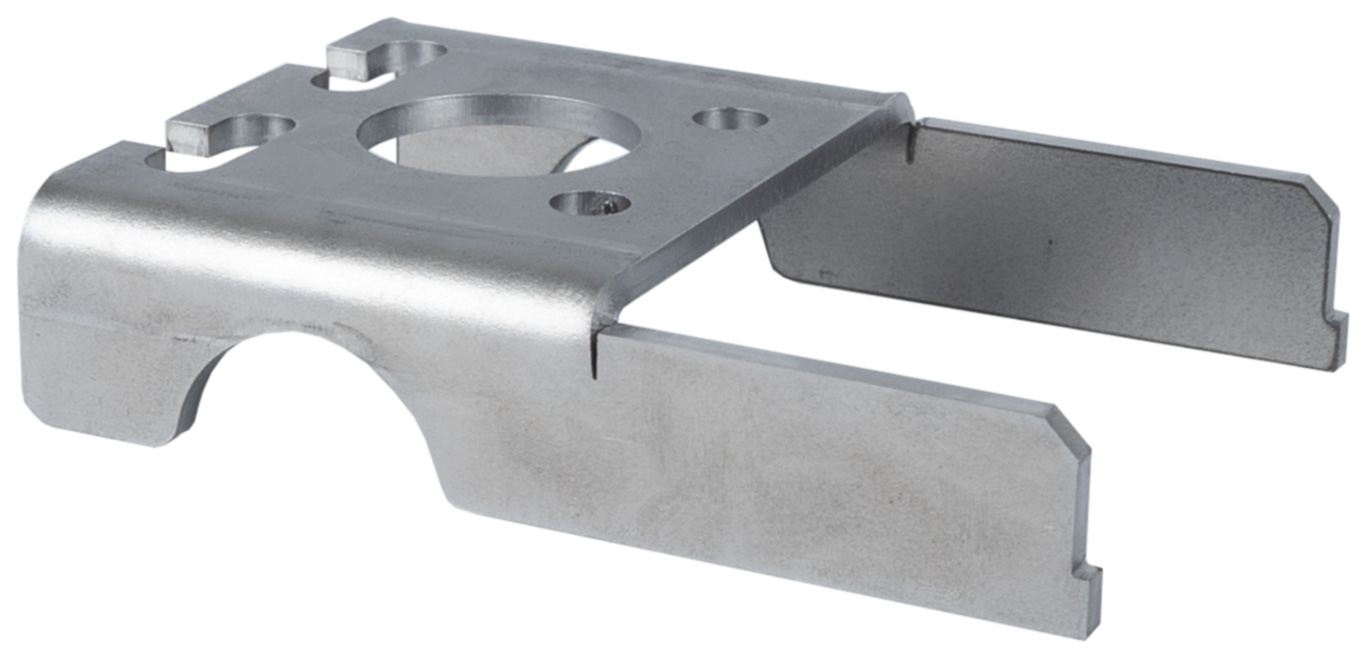
Contour cuts with nitrogen
At Contour, we deliberately choose nitrogen as our only cutting gas. This way we deliver a clean, oxide-free cut edge as standard, immediately suitable for powder coating, welding and further sheet metal fabrication. No extra operation is needed to remove an oxygen skin; deburring or edge breaking only comes into play when the function, safety or appearance of the product calls for it. This choice ensures a consistently high quality of our sheet metal parts, whether they are made of stainless steel, aluminum or steel.
Want to know more about the cutting process itself? Read about the technology behind the laser and fiber laser or go back to the laser cutting overview.
Frequently asked questions about cutting gases
Which cutting gas does Contour use for laser cutting?
Contour cuts exclusively with nitrogen. This inert gas gives a clean, oxide-free cut edge that is immediately suitable for powder coating and welding. Deburring or edge breaking may still be needed for functional reasons.
What is the difference between cutting with nitrogen and with oxygen?
Nitrogen is inert and only blows the melt away: the cut edge stays clean and oxide-free. Oxygen reacts with the steel and burns it; that cuts faster and thicker, but leaves an oxide skin that often has to be post-processed.
Why is a clean, oxide-free cut edge important?
An oxide skin hinders the adhesion of powder coating and can disturb welding. A clean, oxide-free cut edge can be coated or welded immediately, which makes removing oxide unnecessary and ensures quality.
Can structural steel also be cut with nitrogen?
Yes. Nitrogen is mainly associated with stainless steel and aluminum, but it is also used for structural steel when a clean cut edge that can be processed immediately is wanted.