

Rolling of sheet metal
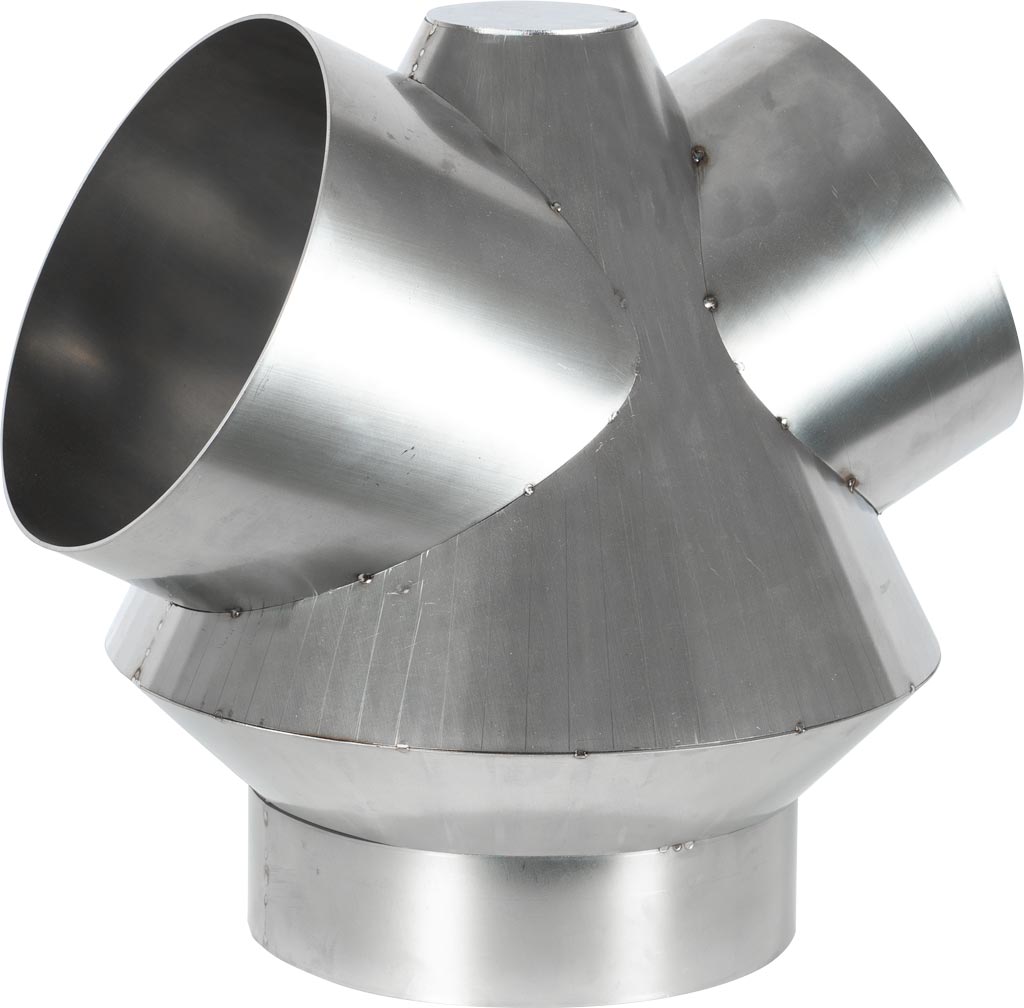
By rolling sheet metal, products of various shapes and sizes can be made. Feeding flat plates through a roller with at least three rolls puts a radius in the product. The result is a sheet metal product in a conical or cylindrical shape.
In this article we take a closer look at the advantages and applications of this technology.
Advantages of rolling
- Large radius: with sheet metal rolling, larger radii can be achieved, which makes it suitable for producing housings, vessels, air duct parts or other components in a cylindrical shape, for example.
- Speed: rolling is a fast way to form sheet metal compared to other techniques such as step bending. It makes it possible to produce large quantities of products in a short time. This has a favorable effect on the cost price of the product.
- Material variety: sheet metal rolling can be applied to various types of metal such as stainless steel, steel and aluminum.
Alternative techniques
- Step bending is an alternative to rolling. In step bending, a radius is put in sheet metal by making several small bends in a row. That increases the cycle time, but it also has an advantage: by making smart use of the back gauges of the press brake, the sheet can be fed through in a controlled way down to tenths of a millimeter. This makes it possible to produce conical shapes whose ends are welded together by TIG fusion welding.
- A CNC swing bending machine with automated product handling is an alternative for putting a radius in sheet metal. Thanks to the automatic product handling and short bending cycle, a short cycle time for putting in a radius is possible here as well. A drawback of swing bending machines is that on many machines the maximum radius is limited to only a few tens of centimeters.