Bending, also known as press braking or CNC press brake bending, is a manufacturing technique for bending metal sheets. Since the late 1970s, CNC bending has developed and evolved at Contour.
The 1970s
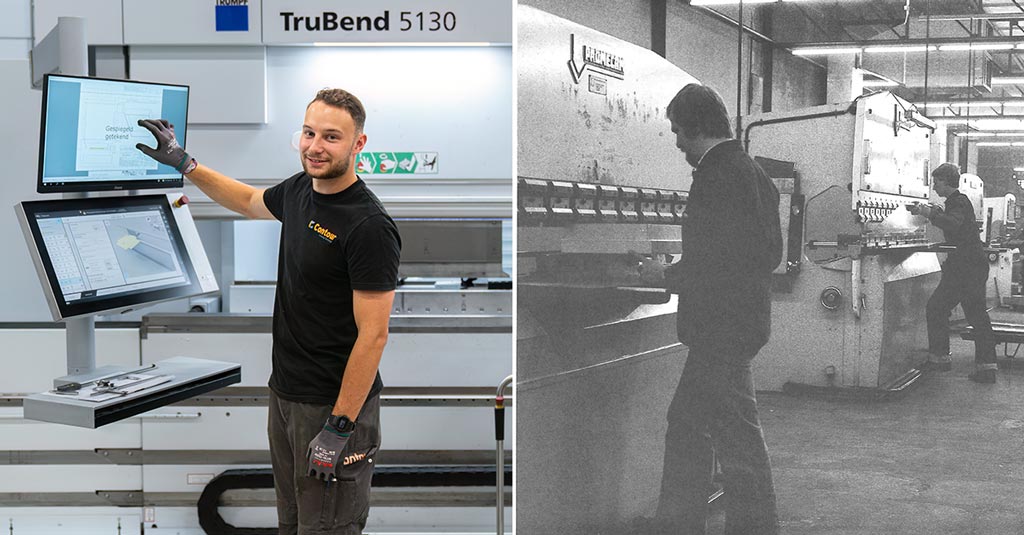
In the late 1970s, the development of CNC bending began with the introduction of the first automated press brakes with numerical control systems based on microchips. These systems were based on a simple CNC language and used a series of codes to control the tool. Although they still required manual adjustments and operation, numerical control was an enormous leap forward compared with traditional manual press brakes. Successive and varying bends in a product were stored in a program. Subsequent bends therefore no longer had to be set up by hand for each bend.
The 1980s
In the 1980s, CNC bending saw further developments. More advanced control systems were introduced that used more complex programming languages. The first software for displaying sheet metal parts in 3D appeared; Contour was a pioneer in this field in those years as well.
The 1990s and 2000s
In the 1990s and early 2000s, 3D technology continued to develop. More and more software solutions came onto the market, at first to convert 2D drawings into 3D models. This made simulation tools possible for testing and optimizing the bending operation virtually, which reduced collisions and errors in the real process. The development of machine control also made it possible to apply measurement data from advanced sensors, such as laser scanning technology, in real time in the bending process.
As product design in CAD increasingly worked primarily in 3D instead of 2D, this also affected CNC bending software. Where the starting point used to be a 2D drawing, it became possible to work directly from a 3D drawing from the engineer or customer. The intelligence of the software was therefore increasingly aimed at converting the variety of 3D designs and file formats from engineering into CAD-CAM processes.
Today: automation and robotics
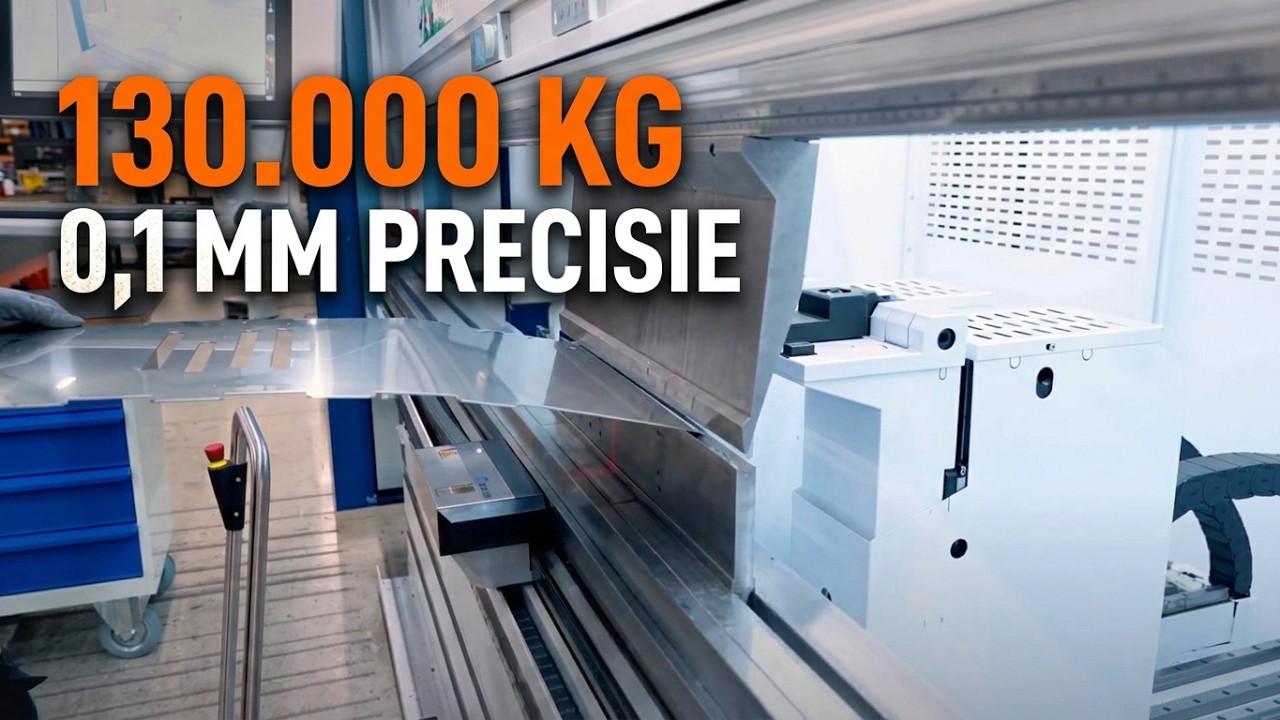
With today’s advancing automation and robotics, CNC bending has again made important progress. Modern press brakes are now also integrated with robot systems that automate the loading and unloading of workpieces. At Contour, three press brake robot systems are now in operation. These systems are linked to an automatic sheet storage system. The supply of flat sheet from the cutting machines is fully automated on these machines. The systems are controlled by extensive software that optimizes production and increases efficiency. Not only the production technology but also the logistics control has become part of the automation.
The future: digitalization and connectivity
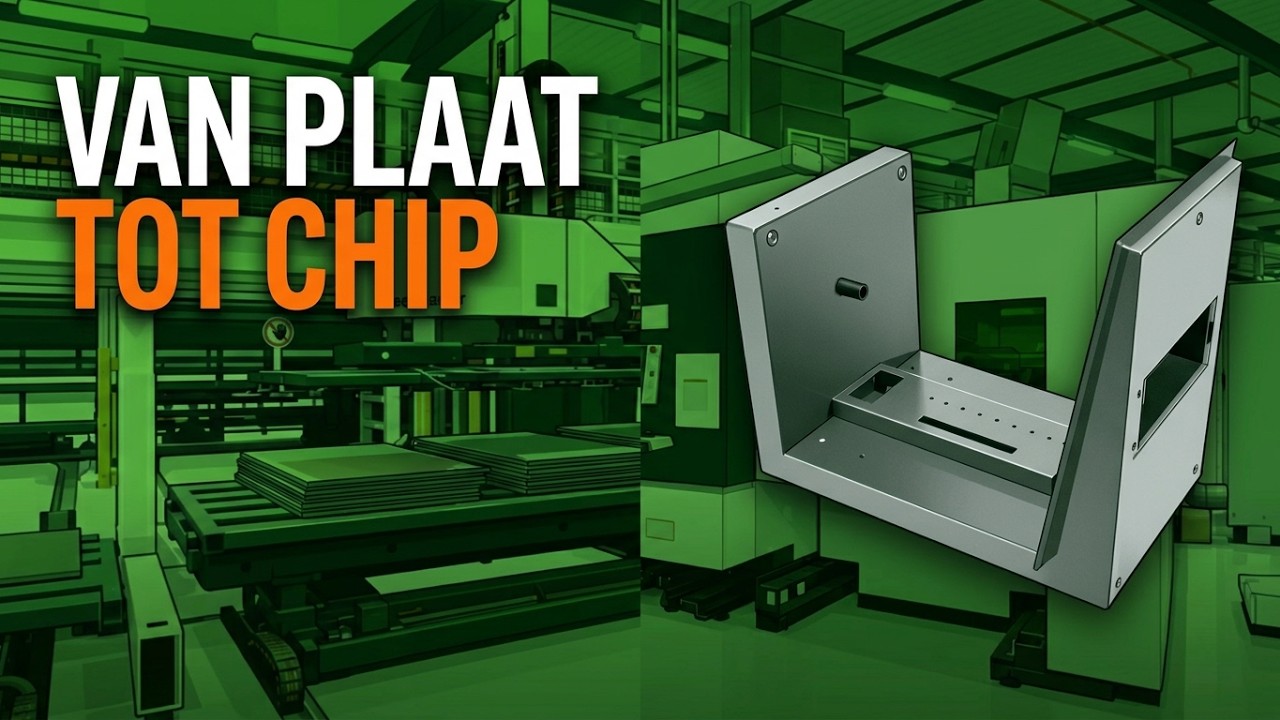
The future of CNC bending is characterized by further digitalization and connectivity. Integration with the processes around the bending itself is becoming more and more important. Starting at the design stage in engineering, new software and file formats make it possible to work ever more smartly. During the CAD design phase, 3D geometry is enriched with PMI metadata (product manufacturing information). Where relevant information such as tolerances and fits used to be on a 2D drawing, it is now increasingly stored in the 3D geometry itself (MBD, model based definition). This reduces the risk of human error and speeds up programming. An important point is that this development is driven not only by sheet metal companies themselves but also by leading companies such as ASML. In the end, this technique will make it possible in more and more cases to convert the 3D designs from engineering into a CAD-CAM file fully automatically.
Another important aspect of the future development of CNC bending is the use of advanced algorithms and optimization techniques. With artificial intelligence and machine learning, machines can become self-learning, which allows them to analyze and optimize processes to achieve even better results. In addition, the use of sensors and advanced measurement technology will increase further. This allows CNC machines to collect real-time measurements and feedback, which further improves the precision and quality of bending operations.
Finally, the connectivity of CNC machines with other systems and platforms will offer more and more possibilities for data management, real-time monitoring and analysis of production data. This leads to better insight into the performance of machines and processes, so that efficiency and quality can be optimized further.
Conclusion
All in all, developments in CNC bending since the late 1970s have led to considerable improvements in functionality, precision, automation and connectivity. This evolution has been decisive for efficiency and quality in the metalworking industry and is expected to continue with further innovations in the future.